Online European Roulette Casinos in the UK: Guide
 Available in GB
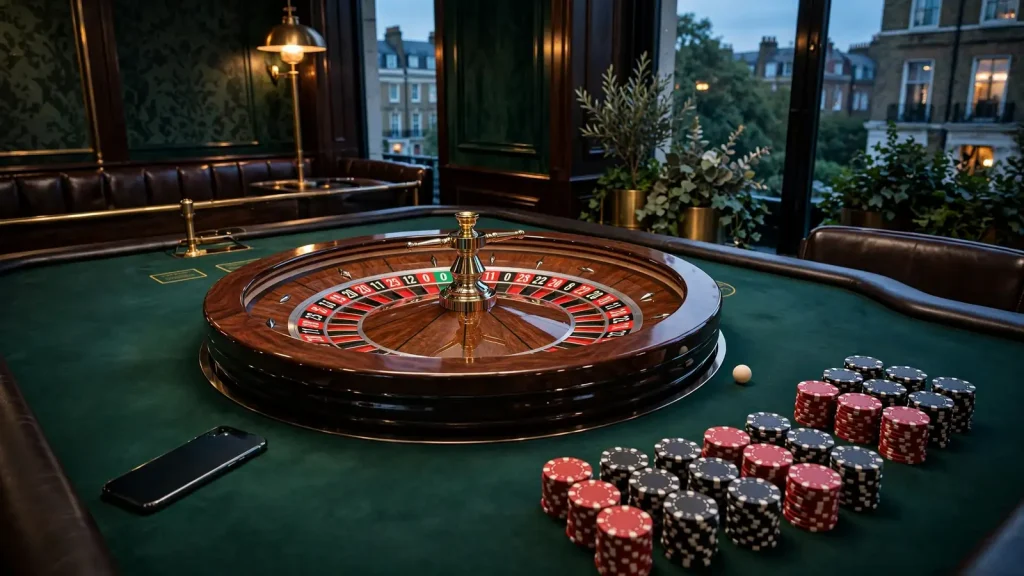
A clear guide to the single-zero wheel, table bets, game formats and how European roulette differs from other versions.
Table of Contents
- European Roulette’s Single-Zero Wheel, in Plain English
- Reading the Table: Numbers, Rows and Outside Bets
- How to Play a Round—and What the Odds Can’t Do
- Finding a UK Casino That Offers European Roulette
- Free Spins or Real Money: Know Which Version You’re Playing
- Roulette Slots and Lightning-Style Games Aren’t Quite the Same Thing
- Live Dealer Roulette: A Real Wheel on Your Screen
- European, American and French Roulette: What Changes?
- Online Slots and Table Games: VegasHero Casino Lobby UK
European Roulette’s Single-Zero Wheel, in Plain English
The defining feature of European roulette is easy to miss if you first meet the game through a screen: its wheel has one green pocket marked zero. The other 36 pockets are numbered from 1 to 36. That makes 37 pockets in all, and every spin ends with the ball settling in one of them.
That single zero is not just decoration. It is central to the game’s mathematics. The numbers may look like the main event, but the zero is what gives the house an edge over time. In European roulette, that edge is 2.70%. If you are comparing games advertised as European roulette at an online casino, this is the basic figure to keep in mind.
What the house edge means
A house edge is a mathematical measure of the casino’s advantage across repeated play. It does not say what will happen on the next spin, or even how a particular session will go. A player can win or lose in the short term; the figure describes the underlying game rather than promising a result for an individual.
It is also not a charge that appears separately on your account. The advantage comes from how the game is structured: the wheel has a zero pocket, and the game’s payouts are set around the possible outcomes. Across repeated play, that structure gives the casino its edge.
I find this easier to understand when I stop treating the zero as a number that behaves like the others. It is one of the possible pockets, but its presence changes the overall balance of the game. That is the point worth carrying with you when you sit down at a European wheel.
Why one zero matters
The wheel is not a sequence that can be read or worked out from previous results. Each spin has an outcome, and the zero remains part of the set of possible outcomes whether it has appeared recently or not. A run of other results does not remove it from the wheel or make the next result predictable.
Online casino without ID in the UK: what to expect
The single-zero format is the standard reference point people often mean when they talk about European roulette. The name describes the wheel, not a promise about how a particular website presents the game. Online, the same basic format may be shown with a graphic wheel, but the key detail remains the pockets it contains: 1 to 36 and one zero.
That is why checking the game’s stated format matters. A roulette title can look familiar while using a different wheel or special rules. For now, the useful baseline is simple: a European wheel has 37 pockets, with just one zero, and its house edge is 2.70%. Other formats can change those underlying figures, so the word “roulette” on its own does not tell you everything.
A sensible starting point
If you are new to online European roulette, begin with the wheel rather than the table graphics or the pace of play. The pocket count gives you the basic shape of the game; the house edge tells you how the casino’s mathematical advantage is built in. You do not need to memorise more than that before understanding the rest.
There is no need to read the 2.70% as a forecast for one visit. It is not a cap on a loss, a target for the casino to collect, or a prediction that a player will lose that share of a particular stake. Individual results can vary. The percentage describes the game’s long-run design, not your personal result.
When I check a roulette game, I look for the zero count before anything else. It is a small detail with a real effect on the maths, and the name of a game alone is not a substitute for checking it. Once you know the wheel has a single zero, you have the right starting point for understanding European roulette online. The rest can wait.
Reading the Table: Numbers, Rows and Outside Bets
The roulette table can look like a jumble of numbers until you notice that it is arranged for betting, not to reproduce the order of pockets around the wheel. On a European table, the numbered grid runs from 1 to 36 in three vertical columns. Each horizontal row holds three numbers, while the single zero sits apart from the grid in its own green space.
A number’s position on the table is designed for betting convenience and does not reflect its actual position on the wheel or its likelihood of appearing.
That separation matters. The wheel gives every pocket its own place; the layout groups numbers so you can cover one number or a set of numbers with a single bet. A number’s position on the felt does not tell you where it sits on the wheel, nor does it make it more likely to come up. The table is a map of betting choices, not a forecast.
Inside bets: covering numbers on the grid
Inside bets are placed on or within the numbered part of the layout. The most direct choice is a straight-up bet on one number. Put it on that number’s box and, if it wins, the payout is 35:1. The same straight-up payout applies on European and American roulette, though the number of pockets differs between those games.
You can also cover adjacent numbers rather than choosing just one. A split bet sits on the line between two neighbouring numbers on the table and pays 17:1. The numbers need to be next to each other in the layout; proximity on the wheel is not what defines a split. This is an easy detail to miss when you are first looking between the felt and the wheel.
A street bet covers a horizontal row of three numbers. Its marker goes at the end of that row, and the payout is 11:1. The layout makes the bet’s reach visible: one row, three numbers. It is a compact way to cover a group, but the reduced payout reflects that broader coverage compared with a single-number bet.
Online Slots and Table Games: VegasHero Casino Lobby UK
The common thread is the trade-off between how many numbers a bet covers and what it pays if it wins. Covering more numbers gives a bet more possible winning outcomes, while its payout is lower than the single-number return. That is a description of the bet structure, not a promise about how often a particular result will appear.
There are other ways to combine neighbouring numbers, but you do not need to memorise every marker position before you can read the table. Start with the grid itself: a marker on a number is a single-number bet; a marker on the boundary between adjacent numbers is a split; and a marker at the end of a horizontal row covers that street. The felt does the counting for you. Mostly.
Outside bets: covering broad groups
Outside bets sit around the edge of the numbered grid. Rather than naming one or two specific numbers, they cover broad categories. Red or black divides the numbered pockets by colour. Even or odd groups them by parity, while high or low separates the lower and upper ranges of the numbered sequence.
These three pairs of choices pay 1:1. If a red bet wins, for instance, the payout is even money: the return matches the amount staked, with the stake also returned. The same payout applies to black, even, odd, high and low. The zero does not belong to any of those categories, so a result there is not a win for these outside bets on a standard European layout.
Red or Black
Divides the numbered pockets by colour and pays 1:1.
Even or Odd
Groups numbered pockets by parity and pays 1:1.
High or Low
Separates the lower and upper ranges of the numbered sequence and pays 1:1.
You will also see options covering a dozen or one of the three columns. A dozen groups a consecutive block of twelve numbers; a column groups the numbers arranged vertically in that part of the grid. These are outside bets because they are selected in the surrounding betting area, even though the numbers they cover are laid out in the main grid. Their labels tell you which group is covered; check the table’s printed markings if the boundaries are not immediately clear.
A useful way to read the whole layout is to separate its two jobs. The numbered grid gives you precise coverage: one number, a pair, or a row. The outer betting areas give you wider categories such as colour, parity, range, dozens and columns. The marker’s position tells you which kind of bet you have selected; the printed lines and labels show its scope.
Reading payouts without confusing them with chances
A payout tells you what a winning bet returns, not how likely the wheel is to land in the covered area. That distinction is especially useful when comparing inside and outside bets. The single-number bet has the largest stated payout among the examples here, while the broad even-money options pay less when they win. Neither fact makes the table’s grid a strategy or gives one location an advantage.
When you sit down at a European table, take a moment to locate the zero, the three numbered columns, and the outside categories. Then read the bet’s boundary before committing: on this layout, a marker placed just beside a number can mean something different from one resting on the number itself. Once you can see those divisions, the betting options stop looking like a field of unrelated boxes.
Online casino tournaments UK: free entry and prizes
How to Play a Round—and What the Odds Can’t Do
Once you understand the table, a round is simple to follow. Choose the bet you want to make, place your chips on the relevant part of the layout, and check that they are where you intended. When betting closes, the wheel spins and the ball lands in a pocket. The dealer or game software then settles the round: winning bets are paid, and losing stakes are cleared.
That is the whole sequence. The part worth slowing down for is the moment before betting closes. On a screen, it is easy to tap the wrong area or leave a chip in a position you did not mean to choose. Check the layout and your stake before the spin begins; after that, the outcome is out of your hands.
European roulette payouts depend on the bet you placed, not on a prediction about where the ball will land. For instance, an even-money bet pays the same amount as your stake when it wins. There is one relevant exception when the ball lands on zero: under La Partage, half of an even-money stake is returned. This reduces the house edge on those bets to 1.35%, but it does not turn a losing result into a winning one.
A practical way to learn how to play European roulette is to watch a round before staking anything, then make one clear bet and follow how it is settled. If a free-play version is available, it can help you get used to the controls without risking money. The mechanics remain the same, but a simulated round is not a forecast of what will happen when you later play for real.
Betting Systems
Strategies like the Martingale cannot change the odds or predict outcomes; doubling stakes after losses can quickly deplete your bankroll.
The numbers on a roulette wheel do not remember previous spins. A run of one colour, a cluster of high numbers or a stretch without your chosen number cannot tell you what comes next. Each final outcome is determined by chance, so no roulette strategy can predict it.
That is why betting systems need to be treated as ways of organising stakes, not ways of changing the odds. The Martingale, for example, calls for doubling your bet after every loss, with the idea that a later win might recover earlier losses. But the next spin is no more likely to win because you have lost several times. A losing streak can keep going, and each increase in stake puts more pressure on your bankroll.
The doubling pattern can become costly quickly. It also assumes you can keep raising your bet and that the table will accept it—neither assumption makes the next result predictable. When you play, decide what you are comfortable staking before the round starts, and do not treat a run of losses as a signal to chase them.
A roulette round gives you a choice of bet, then a result you cannot control. Keep those two things separate. That’s the useful habit.
Finding a UK Casino That Offers European Roulette
When choosing an online European roulette option in the UK for 2026, you may want to check both the game details and how withdrawals are handled. The information available here is limited to payout speed, so use it as one point of reference rather than a full picture.
1. NightWin
Payout speed: 1-3 business days You can expect a stated payout speed of 1–3 business days. No European roulette or other casino details are provided here.
2. SlotoSport
Payout speed: 1-3 business days The stated payout speed is 1–3 business days. You’ll need further information to assess its European roulette offering.
3. Revery Play
Payout speed: 1-3 business days You have a stated payout speed of 1–3 business days to consider. No details about European roulette are available here.
4. Zombillion
Payout speed: 1-3 business days Its stated payout speed is 1–3 business days. The information provided doesn’t describe its roulette games.
5. Amunbet
Payout speed: 1-3 business days You can note the stated payout speed of 1–3 business days. No European roulette details are provided.
6. Dieselwin
Payout speed: 1-3 business days The available information gives a payout speed of 1–3 business days. You’ll need more details to judge its European roulette offering.
7. Britsino
Payout speed: 1-3 business days You can take its stated payout speed of 1–3 business days into account. No information about its roulette selection is provided.
8. BeOnBet
Payout speed: 1-3 business days Its stated payout speed is 1–3 business days. The available facts don’t cover European roulette.
9. Chanze
Payout speed: 1-3 business days You have a stated payout speed of 1–3 business days to consider. No details about its roulette offering are available here.
10. EvoSpin
Payout speed: 1-3 business days The stated payout speed is 1–3 business days. You’ll need additional information to assess its European roulette games.
When I look for European roulette online, I start with the operator, not the game thumbnail. A polished table can make a site look reassuring, but it does not tell you whether the business is allowed to offer real-money gambling to people in Great Britain. That is the first check, and it is worth doing before you create an account or deposit.
Check the UKGC licence
The UK Gambling Commission (UKGC) is the regulator for online casino activity in Great Britain. A casino offering real-money play to British customers must hold the appropriate UKGC operating licence, even if the company is based elsewhere. A foreign licence on its own does not replace that requirement.
Find the operator’s legal name and licence details on its website, then check the entry on the UKGC’s public register. Make sure the registered business matches the casino you are using, and that the licence is current and covers the relevant activity. I would not rely on a badge in the footer by itself; it is easy to display a logo, while the register lets you confirm who is actually licensed.
A site without a valid UKGC licence cannot legally offer real-money live roulette to British residents. The same principle applies to other real-money casino play. If a site’s licensing information is vague, hard to find or inconsistent with the register, I move on rather than trying to interpret it generously.
The operator should also explain how to contact it and how to make a complaint. UKGC licensees must have an internal complaints process, with access to an approved Alternative Dispute Resolution service if the complaint is not resolved. That is not a promise that every disagreement will go your way; it means there is a stated route to follow rather than a dead end.
Verify Casino Licence
- Find the operator’s legal name and licence details on the website
- Confirm the entry on the UKGC public register
- Ensure the licence is current and covers real-money gambling
- Identify the operator’s internal complaints process and ADR service
Look for the game, then check the details
Once the licence is clear, check that European roulette is actually available for real-money play in the casino’s games area. A general roulette label may cover several formats, so open the game information and confirm the version before placing a bet. The rules should be available from the game itself or through the operator’s help pages. You do not need to learn every roulette rule just to find the right table, but the name alone is not always enough to identify what you are opening.
Check whether the game is an RNG version or a live table if that matters to how you want to play. The distinction should be clear in the lobby or game information. Also check the table’s minimum stake before you join. A specialist review of UK casino tables has reported live roulette minimums beginning at 10p, with auto-roulette and speed roulette formats sometimes listed from 5p. Those are reported examples, not a guarantee that a particular table will offer the same minimum; the limit shown in the game is the one that matters.
I also check that the table rules and paytable are accessible before staking. The page should make it possible to inspect the game information without relying on a promotional blurb. If the rules are missing, or the game opens in a format you did not intend to play, there is little reason to press on.
Find the RTP information
RTP information should be available and easy to reach. Look for it in the game’s information panel, the operator’s help section or the game terms. It should relate to the specific roulette game on offer, rather than sitting in a general page with no clear link to the table.
Online Bingo in the UK: Formats, Tickets and Slots
Do not assume that every game carrying the same broad name has identical settings. Check the displayed information for the exact version you are considering, and take a moment to see whether the rules or game details explain how the figure applies. If you cannot find the RTP after looking through the game information and help pages, ask customer support where it is published. A clear answer is useful; a vague assurance is not a substitute for the information itself.
Check account controls before depositing
A UKGC-licensed casino should make its safer-gambling controls visible and usable, not bury them somewhere you only find after a problem. New customers must be prompted to set a financial limit before making their first deposit, and account-level controls must remain accessible. Look for the options to set deposit and loss limits, as well as session time reminders and reality checks.
You should also be able to find cool-off periods and GamStop self-exclusion information. These tools serve different purposes, so it is worth understanding the options before you need them. A licence is a basic requirement, not a reason to skip the controls or assume they suit your circumstances.
The operator must verify your age before allowing you to deposit into a gambling account. Online gambling in the UK is for adults aged 18 and over, and the checks are part of the account process. Be cautious of any site that appears to let you deposit first and sort out age verification later.
Check the payment terms as well. UKGC-licensed casinos cannot accept credit cards for gambling, including credit-card funds routed through a money service business. They also cannot accept wallet payments where the wallet permits credit-card funds to be used for gambling. If the payment method or its funding route is unclear, check the operator’s explanation before using it.
Do
- Set a financial limit before your first deposit
- Use deposit, loss, and session time controls
- Verify your age through the official account process
Don’t
- Deposit funds before completing age verification
- Use credit cards or credit-funded wallets for gambling
- Ignore the operator’s safer-gambling tools
Read the terms, not just the welcome message
Promotional wording can make a casino look simpler than its terms. Before accepting bonus funds, read the conditions that apply to the games you plan to play, including whether roulette is eligible and how its wagering is treated. The weighting can differ between operators and between game types, so do not assume that roulette wagers count in the same way everywhere.
It is also sensible to check the operator’s general terms for withdrawal conditions, account restrictions and the complaints route. I treat a straightforward explanation as a practical sign of a site that has made its rules findable. If key terms are difficult to locate, that is not a puzzle you need to solve before playing.
For a quick check, I use this order: confirm the UKGC entry, find the exact European roulette game, inspect its rules and RTP information, then review the account controls and terms. That takes less guesswork than choosing from a banner or a game image. The important part is not finding a casino that calls itself the best; it is confirming that the specific game and the operator’s conditions are clear before you play.
Free Spins or Real Money: Know Which Version You’re Playing
A European roulette demo is for getting comfortable with the screen and table controls without risking cash. You can try free online European roulette to see how the game behaves, place practice bets and learn where the options sit. It is useful for orientation, but a demo round does not put money in your account or reproduce the pressure of a real-money decision.
Live Dream Catcher Casino UK: How It Works
That distinction matters if you are comparing an European roulette demo with play for real money. In a demo, the balance is for practice; with real money, your stake and any return affect your actual funds. The wheel’s outcome is still a matter of chance in either version. I use a demo to learn the interface, not as evidence that a real-money session will go the same way. Different stakes, same uncertainty.
“Free spins” can also mean bonus funds or promotional spins on a slot, rather than a free roulette session. And a search for an “European roulette slot demo” may lead to a roulette-themed slot, which is a different game from a roulette table. Check the game label before you start: demo roulette is practice play, while a slot demo follows slot rules.
What roulette contributes to a bonus
If you use bonus funds, read the promotion’s terms before choosing roulette. A wager can count towards a wagering requirement without counting in full. UK operators’ terms commonly assign roulette a game weighting in the 10%–20% range, so only that share of an eligible stake may reduce the remaining requirement. The exact treatment depends on the operator and on whether you choose live or RNG roulette.
A specialist review reports a wider difference by format: live roulette may receive a 10% or 20% weighting, while RNG roulette may count in full. Treat that as a prompt to check the offer itself, not as a rule that applies everywhere. Some promotions may exclude a game or format altogether; the terms should say which games qualify and how their weighting is applied.
Attention: Bonus wagering requirements are capped at 10x for UK-licensed operators since January 2026, but this is separate from the game weighting applied to roulette.
There is also a separate UK-wide rule. A specialist review of the 2026 change reports that, since January 2026, UK-licensed operators are subject to a maximum bonus wagering requirement of 10x. That cap limits the requirement attached to a bonus; it does not set roulette’s game weighting. One figure is the maximum wagering multiple, the other is the portion of your eligible play that counts towards it. Easy to muddle; not the same thing.
Before accepting an offer, check the qualifying games, the weighting for your chosen roulette format and the requirement attached to the bonus. If those details are unclear, treat the bonus as unavailable until you understand them. Real-money European roulette without a bonus avoids wagering terms, but it does not remove the risk of losing your stake.
Roulette Slots and Lightning-Style Games Aren’t Quite the Same Thing
A roulette wheel shown on a screen does not automatically make a game a slot. The distinction is what determines the result. In roulette, you place a bet on an outcome and the ball lands in a wheel pocket. A roulette-themed slot, by contrast, is a slot game that borrows the wheel’s look or other casino imagery; it does not become a roulette table just because its graphics include a wheel.
That difference helps when you come across searches for 3D, gold or platinum European roulette slots. Those phrases may point to themed slot products, but the wording alone does not tell you how a game works. Check the game’s rules and category rather than relying on its name or artwork. If you want a roulette game, look for the betting layout and rules; if you want a slot, look for its reels and slot-specific rules.
Lightning-style roulette is different again. It keeps roulette’s betting format but adds a feature that can change payouts on selected outcomes. A specialist review describes Lightning Roulette as paying 29:1 on a straight-up number bet when no lightning multiplier applies, rather than the 35:1 associated with a standard straight-up payout. That is a meaningful difference, not just a brighter screen.
The same specialist review says outside bets in Lightning Roulette retain standard roulette odds. So the added feature does not alter every bet in the same way. Read the paytable before playing: it shows which outcomes may be affected and what a winning bet pays under the game’s rules. A familiar-looking interface is no substitute for that check.
This also matters if you are comparing roulette odds. The numbers printed beside a bet are only part of the picture when a special feature changes the payout. Look at the specific game’s rules, including what happens when no multiplier is active, before treating its returns as identical to standard roulette.
I would keep the categories separate: roulette-themed slots are slots, standard roulette is roulette, and Lightning-style roulette is roulette with an extra payout feature. The labels can blur together in a casino lobby, but the rules do not. Read the paytable first. It saves guesswork.
Live Dealer Roulette: A Real Wheel on Your Screen
With live European roulette, you are watching a real wheel in a studio rather than a digital animation. A human dealer spins the wheel and releases a physical ball; a camera carries the action to your screen. The result comes from that ball drop, while the interface lets you follow the table and place your bets.
Live Dealer Comparison
Standard live tables typically average 80–100 spins per hour, whereas speed roulette formats are reported at more than 150 spins per hour.
That changes the feel of a round. You can see the wheel, the dealer and the result unfold, which gives the game a more tangible rhythm than an automated version. I find it easier to stay oriented when the action is visible: there is a clear sequence, and you are not just waiting for a result to appear. It is still a screen-based game, of course. The studio is on the other side of the stream.
The pace is part of the choice. At a standard live table, the figures cited by a specialist review put the rate at 80–100 spins per hour. Speed roulette is reported at more than 150 spins per hour. Those are not promises for every table: schedules and formats can differ. But the comparison gives you a useful sense of what the name means. Speed roulette moves through rounds more quickly, while a standard table leaves more time between outcomes.
That extra time can make a live table feel less hurried, especially if you want to watch the dealer and wheel rather than focus only on the betting interface. Speed roulette suits a quicker rhythm; it does not make the wheel more predictable. No magic in the faster pace.
When you open a live table, check whether the stream is clear enough to follow and whether the game is actually European roulette. “Live” describes how the round is presented, not which roulette variant the wheel uses. The table name and on-screen rules tell you what you are joining.
A live dealer table is best understood as a real studio game delivered digitally: human dealer, physical wheel, ball drop, streamed to you. If you want the visible ceremony, choose that format. If you prefer rounds to move faster, speed roulette is the more brisk option. Neither changes the basic uncertainty of the next spin.
European, American and French Roulette: What Changes?
The quickest way to compare roulette variants is to count the green pockets. European roulette has one zero alongside numbers 1 to 36, while the standard American wheel adds a double zero. That extra pocket changes the odds against the player, even though the numbered pockets and familiar bets may look much the same.
On a standard American wheel, there are 38 pockets and the house edge is 5.26%, compared with 2.70% on European roulette. That difference comes from the wheel, not from a special betting trick: the extra losing pocket makes the casino’s mathematical advantage higher. If you are choosing between an online European roulette casino game and an American table, check the game’s rules rather than relying on the thumbnail or title.
There is a further wrinkle. A specialist review has reported American roulette tables at UK online casinos with a third green pocket marked 000. That version has 39 pockets and a stated house edge of 7.69%. It is not safe to assume every American table has this feature, so inspect the rules displayed for the specific game. Three green pockets are a different proposition.
French roulette is not simply another wheel with a different name. Its lower edge on even-money bets comes from rules called La Partage and En Prison. With La Partage, half of an even-money bet is returned when the ball lands on zero, bringing the house edge on those bets down to 1.35%. En Prison can also reduce the disadvantage, depending on the table’s rules. French roulette therefore has the lowest house edge among the standard variants, but the benefit is tied to those rules and bet types.
French Roulette Online Casinos in the UK
In practical terms, european roulette vs american roulette comes down first to the extra zero and its effect on the edge; French rules can soften the zero’s impact. I always check both the pocket count and the rule sheet before placing a bet. Small detail, real difference.
Should I play American or European roulette if I’m in the UK?
European roulette has the lower house edge: 2.70%, compared with 5.26% for American roulette. That means the standard European wheel gives you better odds over time.
What is the house edge on European roulette compared to American roulette?
European roulette has a 2.70% house edge, while American roulette has a 5.26% house edge. An American basket bet has a higher edge of 7.89%.
What are inside and outside roulette wagers?
Inside bets cover specific numbers or small groups on the numbered grid, such as a straight-up bet or a split bet on two adjacent numbers. Outside bets cover broader groups, such as red or black, even or odd, and high or low; these pay 1:1.
Online Slots and Table Games: VegasHero Casino Lobby UK

Real Dealer Tables and Game Shows: VegasHero Live Casino UK
VegasHero UK Guide Independent casino review and regulatory context Live casino guide VegasHero has a...

Aviator Casino Game in the UK: Sites and Rules
Aviator platforms may be UKGC-regulated or offshore, and that distinction affects the rules behind real-money...

3-Reel Slots in the UK: Play, Odds and Formats
The digital setting changes how the game is accessed and presented, while the reels remain...

5-Reel Slots in the UK: Browser Play and Safety
Five-reel games run in a browser, with free play options and features that can shape...

Bonus Buy Slots in the UK: Demos and Features
A practical look at demo play, bonus-round structure and how buying a feature can change...

UK Online Casino Keno: Returns and Fast Payouts
Keno payouts depend on the combination of selected spots and catches, while withdrawal speed is...

First-Deposit Casino Bonuses in the UK: How They Work
First-deposit promotions can add bonus credit or extras, but claiming steps and withdrawal rules depend...

High-Volatility Slots in the UK: How They Work
Learn how volatility, reel bets and pay settings shape a slot session, and why neither...

High-RTP Slots in the UK: How to Compare Returns
RTP offers a long-run comparison of stated returns, while volatility, game versions and session outcomes...

Online Keno Casinos in the UK: Rules and Play
Keno games vary in format, spot limits and payout terms, so understanding the rules can...

Live Casino UK Guide: Games, Rules and Offers
A practical overview of streamed tables, game rules, UK requirements and the terms attached to...

Best Low-Volatility Slots in the UK: How They Work
Volatility describes the broad shape of returns; it does not guarantee a steady run of...

Online Slot Payout Percentages: What RTP Means
A game's percentage describes payouts relative to money played through it, but does not predict...

Best RTP Casino Slots in the UK: How to Compare
RTP describes a game's theoretical long-run return, while short sessions can vary widely and do...

Video Slots in the UK: How Five-Reel Games Work
A practical guide to reel layouts, paylines, free play, bonus terms and the differences between...

Casino Dice Games in the UK: How Online Play Works
Online dice play can resemble a physical throw, but outcomes may come from computer-generated random...

Chicken Road Game Casino UK: What to Check
Online availability depends on where a casino operates, while demos, rewards and game formats should...

Crash Casino Games in the UK: How They Work
Explore how crash games work within online casinos, from licensing and demo play to payment...

Crazy Time Live Casino Game Show in the UK
The guide explains the live format and practical checks around casino terms, free play, bonuses...

Deal or No Deal Casino UK: How the Game Works
The guide explains the show’s offer-and-reveal tension and considers demos, online checks and casino features...

Fastest payout online casino in the UK: Keno
Keno prizes depend on selected spots and catches, while cash-out timing begins only after a...

French Roulette Online Casinos in the UK
Learn how wheel layouts, table limits, live or RNG formats and bonus contribution rates affect...

Hi-Lo Casino UK: How the Next-Card Choice Works
Hi-Lo compares the next card with the one showing, while the available choices and exact...

JetX Casino Game in the UK: Demo and Game Type
A guide to JetX’s casino format, free-play limits, random-number games and the checks that matter...

Live Baccarat Online Casinos in the UK: A Guide
A practical guide to online baccarat bets, live tables, banker commission, limits and bonus terms...

Live Blackjack Online Casinos in the UK: What to Check
Learn how live tables run, what to check in a licence, and why no betting...

Live Casino Lightning Roulette in the UK: What to Check
A practical guide to identifying live roulette, assessing the table and casino, and understanding what...

Live Dream Catcher Casino UK: How It Works
A practical look at the studio stream, on-screen betting controls, table rules and site checks...

Live Roulette UK: English-Speaking Dealers
Live roulette combines a real-time dealer and wheel with digital betting controls, while table formats,...

Mines Casino Game in the UK: What to Know
The guide separates operator regulation, game availability, demo play and bonus funds, while keeping claims...

Monopoly Live Casino UK: How Live Play Works
A practical guide to the dealer, live stream and betting interface, with a clear look...
Online Bingo in the UK: Formats, Tickets and Slots
A practical guide to ticket patterns, real-money and free play, site features, mobile sessions and...
Online American Roulette in the UK: Rules and Odds
A guide to American roulette’s 00 pocket, table layout, bets and results, including how its...

Online Casino Games for Real Cash in the UK
A practical look at slot stakes and paylines, payout checks, UK licensing, and the terms...

Online casino tournaments UK: free entry and prizes
Tournament formats can differ by entry method, scoring rules, prize terms and leaderboard timing, so...

Online casino without ID in the UK: what to expect
A quick registration may avoid an immediate document upload, but it does not remove a...

Plinko Casinos in the UK: Licensing, Play and Payments
Plinko games, casino claims, demo play and payment terms are assessed alongside the distinction between...