Most Trustworthy Online Casinos in the UK: Licence Checks
 Available in GB

A licence is the starting point for assessing a casino, while the operator behind its brand determines which business provides the gambling service.
Table of Contents
- What Trust Looks Like in a UK Casino
- How UK Licensing Works—and Where Its Reach Stops
- What “Not on GAMSTOP” Means for UK Players
- Real-Money Play: Checks to Make Before You Deposit
- Slots, Wagering Terms and the Small Print
- Bitcoin Claims and Casino Lists: Check the Licence First
- How to Read the Operator Comparison on This Page
- What a Casino Review Can—and Cannot—Tell You
- Can You Trust an Online Casino? Look Beyond the Label
- A Practical Licence Check Before You Sign Up
- Casino Guides
What Trust Looks Like in a UK Casino
When you are judging whether an online casino is trustworthy, begin with a plain question: is the business offering it covered by the relevant UK Gambling Commission licence for serving players in Great Britain? That is the regulatory baseline, not a guarantee that every part of the experience will suit you.
The location of the company does not change that starting point. A remote gambling business can be based outside Great Britain and still need the appropriate UK Gambling Commission licence if it offers gambling facilities to consumers here. “We are based overseas” is not, by itself, an exception to the requirement.
That matters because casino brands and the businesses behind them are not always the same thing. The name on a website may be familiar, but the regulatory question concerns the operator providing the gambling service. A brand name, polished design or confident claim about being trusted cannot stand in for that coverage.
I would treat a UKGC Licence as the entry condition for a casino serving Great Britain, rather than as a badge that settles every other question. A licence means the operator is within the relevant regulatory framework for this market. It does not turn the word “trustworthy” into a formal rating, nor does it tell you that every promotion, payment arrangement or customer-service experience will be ideal.
When choosing an online casino, you may want to consider how long withdrawals take. This list gives you the stated payout speed for each operator.
1. NightWin
Payout speed: 1-3 business days NightWin lists a payout speed of 1–3 business days. You can use that timeframe as one point of reference when considering the operator.
2. SlotoSport
Payout speed: 1-3 business days SlotoSport lists a payout speed of 1–3 business days. That is the available information to help you assess its payout timing.
3. Revery Play
Payout speed: 1-3 business days Revery Play lists a payout speed of 1–3 business days. You can factor this stated timeframe into your consideration.
4. Zombillion
Payout speed: 1-3 business days Zombillion lists a payout speed of 1–3 business days. This gives you a stated timeframe for payouts to consider.
5. Amunbet
Payout speed: 1-3 business days Amunbet lists a payout speed of 1–3 business days. You can take this stated timing into account when evaluating the operator.
6. Dieselwin
Payout speed: 1-3 business days Dieselwin lists a payout speed of 1–3 business days. This is the available detail on its payout timing.
7. Britsino
Payout speed: 1-3 business days Britsino lists a payout speed of 1–3 business days. You can use this timeframe as a reference when considering payouts.
8. BeOnBet
Payout speed: 1-3 business days BeOnBet lists a payout speed of 1–3 business days. This stated timeframe is the available information about its payouts.
9. Chanze
Payout speed: 1-3 business days Chanze lists a payout speed of 1–3 business days. You can factor this stated timing into your assessment.
10. EvoSpin
Payout speed: 1-3 business days EvoSpin lists a payout speed of 1–3 business days. This gives you a stated payout timeframe to consider.
That distinction is useful when a site describes itself as one of the most trustworthy online casinos in the UK. The phrase is a judgement, not a regulatory category. A casino might make a persuasive first impression, but the first question remains whether the business is authorised to offer remote gambling to people in Great Britain. If it is not covered by the relevant licence, attractive presentation does not fix the central problem.
The Commission’s role here is tied to remote gambling offered to consumers in Great Britain. For you, that makes the licence more than a decorative footer detail: it is the basic sign that the operator falls within the domestic regulatory system for this service. Without that baseline, you are not comparing like with like when weighing a licensed casino against a site operating outside that framework.
I would also avoid reading too much into a casino’s use of words such as “safe”, “reliable” or “trusted”. Those claims may describe how the operator wants to be seen, but they do not establish its regulatory standing. The same goes for a familiar logo or a long list of games. None of those things answers who is providing the gambling facilities or whether that business has the relevant permission to serve the market.
A sensible trust assessment therefore starts narrow. Identify the operator behind the casino and establish whether the relevant UK Gambling Commission licence covers its service to Great Britain consumers. Keep that separate from later questions about account access, offers, payment methods or how a particular site handles a dispute. Those details can matter, but they do not replace the first test.
No account casino UK: what the label means
There is a practical reason to keep the order straight. If you begin with bonuses, game choice or a headline claim about fast withdrawals, it is easy to spend time comparing features before establishing whether the operator belongs in a comparison of UK-facing casinos at all. Start with regulatory coverage; then assess the rest on its own merits. A good-looking offer is still just an offer.
Nor should the licence be treated as a personal recommendation from the regulator. It establishes that the operator is subject to the relevant regime, not that the Commission has singled it out as the best choice for you. Trust is built from verifiable details, and the licence is the first of those details—not the whole case.
So, if you are looking for a trustworthy casino online, keep the opening test simple: does the business providing the service have the relevant UK Gambling Commission licence for consumers in Great Britain? That is the baseline against which the rest of your judgement should sit. It will not answer every question, but it prevents a brand’s own claims from doing the regulator’s job. A necessary first check.
How UK Licensing Works—and Where Its Reach Stops
The UK Gambling Commission regulates remote gambling offered to consumers in Great Britain: England, Scotland and Wales. If an operator offers real-money gambling to customers in those nations, it must hold the relevant UKGC Licence. The operator’s headquarters can be elsewhere; what matters for this requirement is that it serves the British market.
An operator’s headquarters can be located anywhere in the world, but they must hold a UK Gambling Commission licence if they offer gambling services to consumers in Great Britain.
That is the useful starting point when you are trying to judge whether an online casino is operating within the rules that apply here. But “UK” and “Great Britain” are not interchangeable in this context. Northern Ireland is part of the United Kingdom, yet it does not fall within the Gambling Commission’s remote-gambling remit in the same way as England, Scotland and Wales.
Great Britain is the Commission’s patch
The Gambling Act 2005 provides the framework for gambling regulation in England, Wales and Scotland. Under that framework, the Commission oversees remote gambling offered to consumers in those places. Its job is not simply to issue a badge for a website. It regulates operators that fall within its remit and sets the conditions they must meet to offer gambling lawfully in Great Britain.
For you, the practical point is that a company’s country of registration does not, by itself, decide whether it needs a British licence. An overseas operator serving customers in Great Britain still needs the relevant UKGC Licence. A site does not become exempt just because its office, servers or parent company are based beyond the UK.
Nor should the word “UK” on a casino’s branding settle the matter. A name, flag or claim of being British does not define the regulator’s jurisdiction. The location of the customers being served is central to the requirement. That distinction can sound technical, but it is the difference between asking where a company is based and asking which rules apply to its offer.
Merkur Casino Online UK: Games, Demos and Checks
Northern Ireland is different
Northern Ireland is not covered by the Gambling Commission’s remote-gambling remit. The Gambling Act 2005 does not extend there in the same way it does across Great Britain. Northern Ireland has a separate legal framework, including the Betting, Gaming, Lotteries and Amusements (Northern Ireland) Order 1985.
So a statement such as “the UKGC regulates every online casino in the UK” is too broad. The Commission regulates remote gambling offered to consumers in Great Britain; Northern Ireland sits outside that specific remit. That does not mean the rules for Great Britain simply disappear when a site is viewed from Northern Ireland. It means the regulator and legal framework cannot be treated as identical across all four nations.
It is also worth keeping the distinction precise. A UKGC Licence is evidence that an operator is licensed within the Commission’s system for the activities and markets covered by that licence. It is not a general certificate that resolves every question about a business everywhere in the UK. Geography matters. So does the scope of the operator’s permission.
Why the boundary matters to players
Suppose a casino describes itself as “UK licensed”. Read that as a claim to check, not a complete explanation. The phrase may be referring to a Gambling Commission licence for Great Britain, but it does not tell you, by itself, which legal regime applies to a customer in Northern Ireland. The same company can face different regulatory questions depending on where it offers gambling.
This is one reason broad labels can mislead without being outright false: they squeeze separate jurisdictions into a single phrase. When someone asks what makes an online casino trustworthy, the answer has to begin with the right jurisdiction. A regulator can only be judged against the territory and activities it actually oversees.
Attention: The term "UK licensed" can be misleading, as it may not specify whether the licence covers Great Britain or the separate legal framework in Northern Ireland.
I would keep the map simple. England, Scotland and Wales fall within the Commission’s remote-gambling remit. Northern Ireland does not fall within it in the same way and has its own framework. If a site serves customers in Great Britain, it needs the appropriate UKGC Licence regardless of where the operator is based. That is the boundary to understand before drawing conclusions from a casino’s claims.
The point is not that a British licence answers every practical question about a casino. It is that the licence belongs to a particular regulatory system, with a particular geographic reach. Treating “UK” as one uniform licensing area blurs that reach and makes a basic check less useful. Start with the player’s location and the regulator responsible there; only then can the operator’s claims be read in context.
What “Not on GAMSTOP” Means for UK Players
“Not on GAMSTOP” is a description of a site’s relationship to a self-exclusion scheme, not a mark of quality. It does not tell you that an operator is trustworthy, safe to use or properly authorised to serve customers in Great Britain. If you are looking for a trustworthy non-GAMSTOP casino, start by asking what the label means in practice: is the operator outside the UK regulatory system, or is there a mismatch between the claim and the operator’s actual status?
For online gambling offered to people in Great Britain, the regulatory position is clear. An operator must hold the relevant UK Gambling Commission licence even if its business is based abroad. Operators within the Commission’s Great Britain regime must also participate in GAMSTOP. That participation became compulsory on 31 March 2020. So a site that is genuinely licensed to provide remote gambling to customers here should not present itself as an exception to GAMSTOP.
Casino Without Swedish Licence: Non-UK Status Explained
The phrase can therefore be a warning that a site does not operate under the Great Britain licensing regime. It might be aimed at people who want to gamble despite having excluded themselves through GAMSTOP. That is not a trustworthy alternative for someone trying to maintain an exclusion: it may allow access where a regulated operator should not, and it does not provide the same regulatory standing. A polished website or reassuring wording cannot change that.
There is another possibility: the label may be loose or misleading. A site’s marketing description is not proof that it is outside GAMSTOP, just as the presence of a familiar-looking brand is not proof that it has the right licence. Treat the claim as something to verify, not as a feature that makes an operator more appealing. In particular, do not assume that “not on GAMSTOP” means the site has been checked or approved by a regulator.
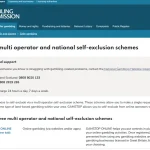
If you have registered with GAMSTOP, the scheme is there to help you block access to participating online gambling operators. Looking for a site that avoids that block works against the purpose of the exclusion. I would not read the ability to get around a safeguard as evidence of better service. If the urge to gamble is becoming difficult to manage, GamCare can offer support, and the National Gambling Helpline is available around the clock on 0808 8020 133.
Warning
Using a non-GAMSTOP site to bypass a self-exclusion is not a trustworthy alternative and avoids essential regulatory safeguards.
If you have not self-excluded but see the phrase in a casino advert or review, keep two questions separate. First, does the operator have the UKGC Licence needed to offer remote gambling to customers in Great Britain? Second, is it participating in GAMSTOP as required under that regime? A “yes” to one should not be inferred from a vague claim about the other. Equally, a site’s lack of GAMSTOP participation does not itself explain its legal status; the licence and the operator behind the site matter.
The important distinction is between a site’s sales language and its regulatory position. GAMSTOP participation is required for operators in the Commission’s Great Britain system, while the licence requirement applies to remote gambling businesses serving customers here regardless of where they are based. A site promoted as a trustworthy option because it is “not on GAMSTOP” is making the wrong thing sound like a selling point. Check what sits behind the label, and do not use it as a reason to bypass an exclusion you chose for yourself.
Real-Money Play: Checks to Make Before You Deposit
The point at which you can start playing is not the point at which checks begin. In Britain, an online gambling operator has to verify your age and identity before letting you deposit or play. If a site seems to offer a way around that, treat it as a reason to pause, not a shortcut.
You must be at least 18 to gamble online legally in the UK. An account form may ask for your date of birth and personal details when you sign up, but filling it in is not the same as completing the checks. Give accurate information and make sure it matches the documents you may later be asked to provide. A typo in a name or an old address can turn a simple check into a frustrating exchange.
Get your documents ready
Identity checks commonly involve a photo of your passport or driving licence, alongside a recent utility bill as proof of address. The operator may ask you to upload these through your account. Before sending anything, check that the document is readable, in date where relevant, and shows the details you entered.
I’d also check that the account is in your own name and that the payment method belongs to you. If there are identity or payment-ownership questions, answer them directly rather than trying another person’s details or a different payment route. A mismatch can lead to extra questions when you want to use the account.
Keep an eye on messages in your account and email after submitting documents. If the operator asks for a clearer image or another document, follow the request through its stated channel. Don’t send sensitive information in response to an unexpected message without first checking that it genuinely came from the operator.
Set your limit before funding the account
A new customer must be prompted to set a financial limit before making their first deposit, and the account must provide accessible controls for managing limits. Take a moment to decide what you can afford to lose before money is involved. This is easier to do while the balance is still zero.
Tip
Set your financial limit while your account balance is still zero; this ensures the boundary is decided in a calmer moment before money is involved.
You can reduce a limit straight away; an increase has a cooling-off delay. That difference matters if you later feel tempted to change a decision made in a calmer moment. I find it useful to treat the initial limit as a boundary, not a target to work up to.
Make sure you can find the limit controls in the account, rather than assuming they will be easy to locate later. If you cannot see them, ask the operator how to manage your limit before depositing. The same goes for any account settings you expect to use: find them while there is no urgency.
Before you press deposit
Run through a short check:
- Have you entered your real name, date of birth and address accurately?
- Can you provide the requested identity documents if asked?
- Is the payment method yours, and are its details consistent with your account?
- Have you set a financial limit and found where to change it?
- Do you understand what information the operator needs before access is approved?
These are practical access checks, not a promise that every later account issue will be effortless. If verification is still pending, wait for it to be resolved rather than trying to deposit or play first. A trustworthy real-money online casino should not make you guess whether the required checks are complete. Better to sort it before the money moves.
Slots, Wagering Terms and the Small Print
A bonus is not the same thing as cash you can withdraw. Before accepting one, I’d read the offer terms in the order that matters: what you must stake, which games count, how long the offer lasts, and what happens to any balance you have not used by then. The headline is the easy part.
UK Online Casinos: What “Highest Paying” Means
Wagering is the total amount of qualifying bets required before bonus-related funds can be withdrawn. A specialist casino review illustrates the arithmetic with a £20 bonus carrying 10x wagering: that means £200 in total stakes, not a £200 profit target. It also does not mean you will necessarily have £20 left when you reach that amount; each bet can win or lose.
Check what counts
The game contribution can change how quickly wagering progresses. A specialist review describes slots as contributing 100% towards a wagering requirement, while live tables and blackjack may contribute less or not count at all. That is an account of terms found in a review, not a promise that every promotion works the same way. Check the specific offer before you play: if a game contributes less, your stakes may move the requirement forward more slowly than you expect.
Look for exclusions as well as contribution rates. Terms may limit which games qualify, set a maximum stake while a bonus is active, or say that a particular action makes the offer void. If the wording is unclear, ask the operator to explain it before opting in. A generous-looking number does not clarify the rules beneath it.
Free spins also need their own check. Find out which game they apply to, whether winnings are credited as cash or bonus funds, and whether those winnings carry further wagering. The label alone tells you little about what you can eventually withdraw.
Mind the expiry
A specialist casino review describes bonus funds and free spins as expiring after a set period, with examples ranging from 7 to 30 days. The terms for the offer you are considering are what count: note the expiry point and any separate deadline for activating spins. An unused bonus can disappear, and a balance that has not met its conditions may be removed too.
Do
- Check the wagering requirement amount
- Verify which games contribute to wagering
- Note the bonus expiry date
Don’t
- Treat a bonus as immediate withdrawable cash
- Assume all games count equally towards wagering
- Ignore the small print of the offer
I treat the promotion as a separate set of rules, not as a shortcut to a payout. If the wagering, eligible games, stake conditions or expiry are hard to find, that is a reason to pause rather than guess. Small print, large consequences.
Bitcoin Claims and Casino Lists: Check the Licence First
Bitcoin can make a casino sound modern, private or international. None of those descriptions tells you whether the operator is authorised to offer gambling to people in Great Britain. The payment method and the operator’s regulatory status are separate things.
A business that provides remote gambling facilities to customers in Great Britain needs the relevant UK Gambling Commission licence, wherever the business itself is based. That requirement does not change because a site accepts Bitcoin, uses a digital wallet or describes itself as offshore. If a casino is aimed at British customers, a Bitcoin logo is not a substitute for the required UKGC Licence.
That is the first point I would settle before weighing up any claims about a trustworthy Bitcoin casino. Does the operator have the licence required to serve this market? A polished website, familiar-looking branding or a page calling itself a list of trustworthy online casinos cannot answer that question by itself. Nor does a payment option establish that the regulator has approved the operator.
Treat the payment claim as a separate claim
Read what the site actually says about Bitcoin, then keep that information in its proper place. It may tell you how the operator presents its payment options; it does not, on its own, establish who runs the casino or whether that business holds the necessary UKGC Licence.
Be wary of wording that bundles everything together: “licensed”, “trusted” and “Bitcoin-friendly” may appear side by side, but each is a different claim. A licence statement should be attributable to the operator responsible for the gambling service, not inferred from a payment provider, a software brand or a prominent badge. The distinction is easy to miss when a page is designed to move you quickly from a headline to a deposit.
I would also read a casino list as a starting point for checking, not as proof that every entry is suitable for British players. Lists can mix promotional language with factual details, and a mention of Bitcoin does not settle the regulatory question. A list may be neatly arranged. That is not the same as verification.
Keep the order straight
First establish whether the operator is licensed to provide remote gambling to customers in Great Britain. Then consider whether its payment information is clear and relevant to you. Reversing that order puts the attractive feature first and the essential question second.
If the licence claim cannot be connected clearly to the operator serving you, do not treat the Bitcoin option as reassurance. It is simply a payment claim. For a UK player, the important distinction is not whether a casino accepts a particular digital currency, but whether the business offering the gambling has the required standing to serve this market.
How to Read the Operator Comparison on This Page
The comparison beside this section is a starting point, not a verdict handed down from above. A high position can help you decide what to inspect first, but “best” is not a promise that an operator will suit you, or that every detail will remain unchanged. Treat each entry as a set of claims to check, not a shortcut around your own judgement.
Verify Operator Details
Identify Legal Name
Find the operator’s legal name in the casino’s footer or terms, as it may differ from the brand name.
Check Public Register
Search the UK Gambling Commission’s public register using the company name or account number.
Confirm Domain
Ensure the web address you are using is listed as an active domain for that specific operator account.
I look for details that can be matched to public records, rather than relying on polished descriptions. The operator’s legal name matters: a familiar casino brand and the company running it may not share a name. So do the exact domain and the account details attached to that business. Small mismatches are worth pausing over.
For instance, a specialist review’s register check reported LeoVegas Gaming PLC under operator account 39198, with leovegas.co.uk shown as its active UK-facing domain. That is a useful illustration of the kind of detail a reader can compare: the company, account number and domain should tell a coherent story. It is not a blanket endorsement, and register information can change. Check the current record rather than treating an older mention as permanent.
The comparison’s short verdicts are there to help you navigate, not to replace the underlying evidence. If a claim is important to your decision, follow it back to its source and read the conditions yourself. A neat summary can leave out qualifications; that is what summaries do.
I would also separate things that are easy to blur together. A brand’s reputation, the operator’s regulatory record and the practical terms attached to an account are different questions. One positive signal cannot settle all three.
Use the table to narrow your attention, then verify the details that matter to you before acting. No ranking can make that decision for you.
What a Casino Review Can—and Cannot—Tell You
A useful casino review should show where its claims come from. There is a real difference between a reviewer saying that a site feels reliable and pointing you to a regulator’s record or a published enforcement decision. The second gives you something you can check; it still does not tell you everything about your own experience as a customer.
For instance, a specialist casino review has reported that the UK Gambling Commission’s register associates 333casino.com with Grace Media (Gibraltar) Limited, under account 57869, as a White Label domain. That is a specific relationship recorded in a public register, not proof that every site connected with an operator offers identical service or terms. Register details can also change, so note when the review checked them and compare them with the live record.
Enforcement history adds another piece of evidence. On 26 June 2025, the Commission fined Grace Media £60,000 over breaches concerning self-exclusion and consent for direct electronic marketing. A review that includes this decision gives you useful context about the operator’s regulatory history. It should also describe what the penalty concerned, rather than turning it into a sweeping claim about every aspect of the business.
That is where careful reading matters. A penalty is a documented event; it is not, by itself, a complete verdict on how a particular account will be handled today. Nor does a polished review become independent just because it includes a regulator’s name. Look for clear references to public records, a distinction between confirmed findings and the reviewer’s judgement, and an indication of when information was checked.
Reading Casino Reviews
- Use reviews as a starting point for your own verification, not as a final verdict.
- Prioritize reviews that cite public regulator records and enforcement decisions.
- Check the date of the register search, as regulatory information can change.
- Distinguish between a reviewer’s judgement and confirmed regulatory findings.
I treat trustworthy casino reviews as a starting point, not a substitute for the underlying evidence. A review can help you spot what deserves a closer look. It cannot guarantee fair treatment, settle a complaint for you, or make an old register entry current. Check the trail, not just the verdict.
Can You Trust an Online Casino? Look Beyond the Label
A polished name, familiar design or confident claim of being “trusted” does not tell you who operates a casino or what regulatory status it has. I treat those as presentation, not proof. For players in Great Britain, the meaningful question is whether the operator has the relevant UKGC Licence; a reassuring label cannot replace that.
Register checks can help, but read their findings carefully. A specialist review reported that a check of the public Gambling Commission register dated 26 September 2026 found no entry under the LuckyPays brand or its stated domain, luckypays.io. That is a dated finding about the names searched. It is not, by itself, proof of what a company may call itself elsewhere, or of what a later register search will show.
A separate specialist review reported that a register check dated 25 September 2026 found no Gambling Commission operating-licence entry for Usoftgaming N.V. or Hustles Casino. Again, that describes the result of a particular check at a particular time. The distinction matters: a brand name and a legal company name may differ, and a register search can only establish what appears under the details checked.
That is why “trustworthy” should never be accepted as a status in its own right. Marketing language can sound settled while leaving the operator’s identity or standing unclear. If the details do not line up, pause rather than filling the gaps with assumptions. A recognisable name is not a licence, and a missing match deserves attention—not a guess.
I would also separate a dated register finding from a broad claim about every site using a similar name. The register is evidence of listed regulatory information, not a certificate for a brand’s overall conduct or a promise about future service. Trust has to rest on verifiable details, not tone. Labels are cheap.
Casino Guides for UK Deposits, Licensing and Payments
A Practical Licence Check Before You Sign Up
Before opening an account, check the operator against the UK Gambling Commission’s public register. A polished site name, a familiar logo or a claim of being “licensed” is not enough: remote gambling businesses serving customers in Great Britain need the relevant UKGC Licence, wherever they are based.
Start with the casino’s footer or terms and conditions. Note the legal company name and any licence or account number it gives. Then search the Commission’s register for that company. Check that the record is for an operating licence covering the gambling offered, rather than relying on a badge displayed on the casino’s own site.
Next, look at the register’s domain information. The web address you plan to use should be connected to the listed operator. If the casino uses a different trading name, the register may show a parent company or identify the site as a White Label domain. That can explain a name mismatch, but it is not a reason to skip the check: make sure the operator and domain information actually connect.
For instance, a regulator-register entry links 333casino.com with Grace Media (Gibraltar) Limited, account 57869, and identifies it as a White Label domain. Treat that as a specific register record, not as a general rule about how casino brands are organised.
If you cannot find the operator, cannot match the domain, or the details on the site conflict with the register, do not proceed on the strength of customer-service reassurance alone. Pause and check the Commission’s record directly; a search result or an old review may not reflect the current position.
I would also save or note what you checked and when. Public records can change, so a check made before signing up is more useful than assuming a name you recognise is still covered. The point is not to judge a casino by its branding. It is to confirm that the business behind the page and the address in your browser correspond to the regulator’s record. No match, no account.
How can I check whether a casino is legal?
Check the UK Gambling Commission’s public register for the operator providing the service and confirm it holds the relevant licence to serve customers in Great Britain. A casino’s branding or claims of being trusted are not a substitute for that check.
What is the fastest withdrawal method?
PayPal is the fastest method listed: withdrawals typically clear in about 4–6 hours on weekdays and 8–10 hours from Friday to Sunday.
Is LeoVegas legitimate and safe to bet with?
LeoVegas is listed by the Gambling Commission as an operator under account number 39198, and leovegas.co.uk is listed as its active UK-facing domain. That supports its regulatory legitimacy, but a licence does not guarantee that every aspect of the experience will suit you.
Casino Guides

£1 Minimum Deposit Casinos in the UK: What to Check
A low entry point is only one part of the account’s rules for play, bonuses...

£10 Minimum Deposit Casinos in the UK: What to Check
A minimum deposit is only an entry threshold; payment options, casino rules and promotion terms...

£2 Minimum Deposit Casinos in the UK: Key Checks
A £2 balance may meet a casino’s deposit minimum, but withdrawal thresholds and account conditions...

£20 minimum deposit casino UK: what it means
A £20 minimum sets the threshold for adding money, while your account balance and withdrawal...

£3 Minimum Deposit Casinos in the UK: What to Check
A low cashier minimum can still sit alongside a higher withdrawal threshold, so deposit and...

£4 Minimum Deposit Casinos in the UK: What to Check
The cashier minimum is only a starting point: payment methods, bonus terms and withdrawal conditions...

£5 Minimum Deposit Casinos in the UK: What to Check
A low cashier minimum does not guarantee qualifying bonus terms, immediate withdrawals or extended play....

Anjouan Casino Licence in the UK: What It Means
Anjouan authorisation does not replace the UK Gambling Commission permission required to serve customers in...

Casino apps in the UK: Android app or browser?
Understand when a mobile browser is enough and what an installed casino app changes, from...

Foreign Casinos for UK Players: What to Know
A guide to how non-UKGC sites operate for British customers, including licensing, player protections, payments...

UK Instant-Withdrawal Casinos: How Payouts Work
Withdrawal timing can depend on casino processing, bonus terms, verification and the payment method used....

International Casinos for UK Players: What to Check
An overview of licensing status, bonus terms, payment considerations and protections that may differ outside...

Mobile Casinos That Take Phone Credit in the UK
Phone-credit payments route a casino deposit through a mobile provider, with the cost added to...

Best Offshore Casino Sites: What UK Players Should Know
A practical guide to licensing, player protections, payments and other considerations when foreign casinos accept...

Offshore Casinos for UK Players: Rules and Risks
The guide explains how licensing, payment terms, verification and bonus conditions can affect UK players...

British Casinos Not on GamStop: UK Guide
The label signals that a casino is outside GamStop, not that it is authorised to...

Casino Not on GamStop: Instant Withdrawals Explained
Withdrawal timing depends on checks, casino processing and the payment route, so an instant request...

Casino Sites Not Registered with GamStop UK: What It Means
UKGC-licensed operators must participate in GamStop, while sites outside its jurisdiction are not required to...

No-Verification Withdrawal Casinos in the UK: What to Know
“No verification” often refers to timing, since operators may ask for identity documents before releasing...

UK Casinos With No ID Verification: What It Means
“No ID” may mean checks are delayed, not waived; casinos can use automated checks or...

Casino Without Swedish Licence: Non-UK Status Explained
Non-UK casinos may hold licences from different jurisdictions, but those labels do not offer the...

Casinos Outside GamStop: UK Licensing and Protections
GamStop exclusion applies to participating UKGC-licensed operators, while sites outside the scheme may not offer...

Curacao Casino Licence UK: Legal Status and Risks
A Curaçao licence signals a non-UK regulatory arrangement, not UKGC authorisation or a guarantee of...

Fast Withdrawal Casinos in the UK: How Payouts Work
Payout timing depends on the method used and on the difference between casino approval and...

Gibraltar Casino Licence in the UK: What It Means
A Gibraltar licence identifies the operator’s licensing jurisdiction, while UK authorisation and site terms shape...

Jackpot Mobile Casino UK: Games, Odds and Checks
Jackpot labels cover different prize structures, while mobile access, payment checks and bonus conditions shape...

Merkur Casino Online UK: Games, Demos and Checks
Learn how a casino name differs from a game label, and what to check in...

No account casino UK: what the label means
Understand what the label means and how checks, bonus terms, deposits and withdrawals affect the...

No-Minimum-Deposit Casinos in the UK: Payment Rules
A low cashier minimum may not apply to every payment method, and Bitcoin claims need...

Non-Gamban Casinos in the UK and Self-Exclusion
GamStop links self-exclusion across covered online gambling operators, while other exclusion tools and routes have...

Non-GAMSTOP Curacao casino sites: what to check
A Curacao location or licence claim does not establish whether a casino participates in GAMSTOP...

Non-GamStop European Casinos: UK Rules Explained
A European base does not determine whether an operator may legally offer remote gambling to...

Non-UK Licensed Casinos: What the Licence Means
A licence identifies the regulator behind an operator, but an overseas label does not mean...

Non-UK-Registered Casinos: What UK Players Should Know
Registration, foreign gambling licences and GamStop status are separate issues, with different implications for oversight...

Non-UK-Regulated Casinos: What UK Players Should Know
A casino licensed overseas is not UK-regulated; the operator’s regulator, rather than its branding or...

Non-UKGC Licensed Casinos: Licence Checks
A practical look at regulator status, offshore licensing, player protections and what falls outside UKGC...

Online casinos with an MGA licence in the UK
An MGA licence identifies Malta’s regulator, but does not establish that a casino is authorised...

Online Casino No Registration UK: Free Play Explained
Browser-based demo slots can show how a game works, but free play is separate from...

Online Casino with No Sister Sites in the UK
A sister-site link can reflect common ownership or shared technology without making two casinos identical...

Online Slots Not on GamStop: What Players Should Know
GamStop applies through participating UKGC-licensed businesses, while other sites may not apply the exclusion and...

Quick Withdrawal Casinos in the UK: What to Know
Withdrawal speed depends on more than the payment method, with casino processing, verification and bonus...

Safe Online Casinos in the UK: How to Check a Licence
A practical guide to checking operator details and assessing bonuses, protections, payments and game rules...

Same-Day Payout Casinos in the UK: What to Know
Delivery times vary by payment method, and a fast label does not guarantee an immediate...

UK Online Casinos: What “Highest Paying” Means
RTP offers a long-term comparison of game returns, while withdrawal speed and individual results are...

Casinos not on GamStop in the UK: what to check
GamStop applies to UKGC-licensed online services, while checks on licensing, safeguards and terms help clarify...

Trusted UK Casinos: How to Check a Casino Licence
Understand what UK licensing confirms and which operator, payment and bonus details need separate checks....

USA Casinos for UK Players: Licensing Explained
The American label does not establish a site's licence; UKGC status, payment terms and safeguards...

VPN-Friendly Casinos in the UK: Rules and Risks
A site may allow VPN connections, but that does not make it UK-regulated or provide...