Online casinos with an MGA licence in the UK
 Available in GB

An MGA licence identifies Malta’s regulator, but does not establish that a casino is authorised to serve players in Great Britain.
Table of Contents
- What a Malta Gaming Authority Licence Does—and Doesn’t—Mean in the UK
- How to Judge a “Best” Malta Casino for a UK Player
- Malta Casino Sites and the Question of Where They’re Based
- MGA Casinos and GamStop: What “Not on GamStop” Really Means
- Real-Money Play: Check the UK Licence Before You Deposit
- Can a Malta-Licensed Casino Accept Players from Great Britain?
- Malta Casino Bonuses: Read the Wagering Terms Before You Play
- What the Malta Gaming Authority Licence Covers
- New Malta Casino Sites: Check the Complaints Route First
- Casino Guides
What a Malta Gaming Authority Licence Does—and Doesn’t—Mean in the UK
A Malta Gaming Authority (MGA) licence tells you that an operator is licensed by Malta’s gambling regulator. That is useful information about the regulator overseeing the business, but it answers a limited question: which authority has licensed the operator? It does not, by itself, tell you whether the operator is authorised to offer online gambling to people in Great Britain.
That distinction is easy to miss when a site gives its Malta licence prominent placement. A licence can sound like a general passport to operate anywhere. It isn’t. Regulatory permission is tied to the market an operator serves, not simply to the country named on its paperwork.
What the Malta licence tells you
If a casino says it holds an MGA licence, the claim is about its regulatory status in Malta. It does not turn the site into a UK-licensed operator, and it should not be read as a UK endorsement. The Malta Gaming Authority and the UK Gambling Commission are separate regulators. One authority’s licence does not stand in for the other’s.
If you’re looking at Malta-licensed casino options for the UK, use this list as a starting point and check each operator’s current licensing and availability before you play. The only detail provided here is payout speed, so treat each verdict as a brief reference rather than a full review.
1. NightWin
Payout speed: 1-3 business days NightWin lists a payout speed of 1–3 business days. You can use that as a reference when considering how quickly withdrawals may be processed.
2. SlotoSport
Payout speed: 1-3 business days SlotoSport lists a payout speed of 1–3 business days. You can factor this stated timeframe into your expectations for withdrawals.
3. Revery Play
Payout speed: 1-3 business days Revery Play lists a payout speed of 1–3 business days. This gives you a stated timeframe to consider for payouts.
4. Zombillion
Payout speed: 1-3 business days Zombillion lists a payout speed of 1–3 business days. You can keep this stated processing timeframe in mind when reviewing the operator.
5. Amunbet
Payout speed: 1-3 business days Amunbet lists a payout speed of 1–3 business days. This is the available information to guide your expectations about payouts.
6. Dieselwin
Payout speed: 1-3 business days Dieselwin lists a payout speed of 1–3 business days. You can use the stated timeframe as one point of reference when considering withdrawals.
7. Britsino
Payout speed: 1-3 business days Britsino lists a payout speed of 1–3 business days. This gives you a stated timeframe to bear in mind for payouts.
8. BeOnBet
Payout speed: 1-3 business days BeOnBet lists a payout speed of 1–3 business days. You can consider this stated timeframe when assessing the operator.
9. Chanze
Payout speed: 1-3 business days Chanze lists a payout speed of 1–3 business days. This is the only specific detail provided about the operator.
10. EvoSpin
Payout speed: 1-3 business days EvoSpin lists a payout speed of 1–3 business days. You can use this stated timeframe as a reference for payouts.
I’d keep those points separate when reading a casino’s legal information. The operator’s stated licence may help you understand who regulates it outside the UK, but it doesn’t settle whether it can lawfully provide gambling to customers in Great Britain. A familiar regulator’s name is not a shortcut around that question.
Nor does the phrase “Malta-licensed” describe a single kind of experience for every customer. It identifies a regulator, not a guarantee that every rule, remedy or protection associated with a UKGC licence applies. If the site is not licensed by the UK Gambling Commission, you should not assume that the UK regulator supervises it or can step in over a dispute.
The Great Britain requirement
For remote gambling offered to consumers in Great Britain, the key licence is the UKGC operating licence. The operator’s physical location does not change that requirement: a business based abroad still needs the relevant UKGC licence if it provides remote gambling facilities to people in Great Britain.
So the practical distinction is not “Malta or Britain” as a choice between two equivalent badges. It is whether the operator has the authorisation required for the market it is serving. An MGA licence may be relevant to the operator’s activity under Malta’s regulatory system, but it cannot replace a UKGC licence for serving Great Britain.
That is the point to hold on to when you see a Malta casino licence mentioned in a site footer, terms page or promotional material. The licence may be genuine and still not answer the UK question. A correct claim about one regulator does not automatically establish permission from another.
Casino Guides for UK Deposits, Licensing and Payments
The UK Gambling Commission licenses and oversees gambling in Great Britain. Its remit covers England, Scotland and Wales; Northern Ireland is governed separately and is not regulated by the UKGC in the same way. The distinction matters because “the UK” is often used loosely in casino marketing, while the legal framework for Great Britain is specific.
What the UKGC does not do
The UKGC does not approve licences issued by offshore regulators, and it has no reciprocal licensing arrangement that makes an MGA licence equivalent to its own. It also does not handle complaints about operators licensed outside the UK. If an operator is relying only on a Malta licence, you should not expect the UK regulator to supervise it as though it held a UKGC licence.
This is why I wouldn’t treat a regulator’s logo as the end of the check. Read the operator’s licensing information for what it actually says, then distinguish that from the separate question of authorisation to serve Great Britain. The wording can be accurate yet leave out the detail that matters most to a British customer.
A Malta licence is not meaningless; it identifies a regulator with responsibility for the operator’s licensed activity there. But it does not carry UKGC authority across borders. When a site’s message blurs those two things, the safe reading is the plain one: a Malta licence is a Malta licence, not a UKGC operating licence.
Regulatory Warning
Offering remote gambling services to consumers in Great Britain without a UKGC licence is illegal for the operator.
How to Judge a “Best” Malta Casino for a UK Player
“Best” is a slippery label when it is attached to a Malta casino. It might describe a site’s games, promotions or design, but none of those tells you whether the operator is authorised to serve customers in Great Britain. For a UK player, I would start with a more useful question: can you verify that the operator has a current UKGC licence?
That check matters more than a ranking, badge or confident line on a casino’s homepage. A Malta connection may be part of an operator’s story, but it does not establish what rules apply to you in Great Britain. If a review calls a site one of the best Malta online casinos, treat that as an opinion about the site, not proof of its status here.
Look past the label
A list of MGA casinos can tell you which operators a writer has chosen to include. It cannot, by itself, establish that those operators are suitable for a player in Great Britain. Nor does a Malta Gaming Authority badge answer the separate question of whether the operator holds a UKGC licence.
Check the operator’s identity against the UK Gambling Commission’s own information, rather than relying on a logo or a copied claim. Make sure you are looking at the company that actually runs the gambling service, not merely a brand name that may appear across several pages. If the details do not line up, pause. A polished site does not make a mismatch less important.
The distinction is not a technicality. In Great Britain, remote gambling operators serving consumers must hold the relevant UKGC licence, regardless of where the business is physically based. So a “best casino in Malta” label is not a useful shortcut for deciding whether you can safely treat that site as a UK-regulated option.
Online Casino No Registration UK: Free Play Explained
Judge the protections, not the adjectives
Once you have established the operator’s UKGC status, consider what that licence requires in practice. UKGC-licensed operators must offer tools such as deposit and loss limits, session limits, time-outs and reality checks. These are not decorative features: they let you set boundaries and get reminders while using the service.
I would look for controls that are clear to find and straightforward to use, rather than taking “player friendly” or “responsible” as evidence on its own. Can you locate the account controls without digging through unrelated pages? Is it clear what a limit or time-out will do? If the site makes safeguards difficult to understand, that is a reason to be cautious about its overall claims.
A UKGC licence also has implications for the games themselves. Licensed operators must use games tested and certified by approved testing houses. That gives you a concrete point to check when a site makes broad claims about fairness: the claim should sit within the UK regulatory framework, not rest only on promotional copy.
None of this produces a universal winner. A player who values one feature may not care about another, and a review’s scoring system may reflect the reviewer’s priorities more than yours. The useful test is whether the claims can be checked and whether the relevant safeguards are actually available under the operator’s UKGC licence.
Be careful with “best” lists and bonuses
A “best MGA casinos” list can look like a recommendation, especially when it gives each entry a score. Read the basis for those scores. Does the writer explain how they checked licensing and player protections, or does the ranking mainly compare design and promotional appeal? If the method is unclear, the position on the list tells you very little.
Do
- Verify the operator’s current UKGC licence
- Look for clear account controls and limits
- Check if games are certified by approved houses
Don’t
- Rely on “best Malta casino” labels
- Trust a logo as the final licensing check
- Let a generous bonus distract from licensing status
The same goes for a best Malta casino bonus claim. A promotion may sound attractive, but the headline does not tell you how its conditions affect play or withdrawals. Treat it as a separate decision and read the terms before accepting it; a bonus should not distract you from checking the operator’s UKGC status first. The mechanics of wagering are a different matter from whether a casino is a suitable choice for a British customer.
A sensible comparison therefore starts with verifiable criteria: the operator’s UKGC status, the availability of required account controls, and whether the games fall under the testing and certification rules that apply to UKGC licensees. You can then decide whether the site’s other features suit you. That is a firmer basis than a Malta label, a ranking, or a generous-sounding offer.
If a page cannot clearly connect its “best” claim to evidence you can check, do not let its confidence do the checking for you. The shortlist can wait.
Malta Casino Sites and the Question of Where They’re Based
“Malta casino site” can describe several different things. It might mean a gambling website operated by a company associated with Malta, a brand that holds an MGA licence, or simply a site that presents itself as having a Maltese connection. Those descriptions are not interchangeable, and the words alone do not tell you where the business is actually based.
The same goes for “Malta-based casino”. A company’s registered address, its management or staff, the location of its website infrastructure, and the market it serves are separate details. A Malta address in a footer does not, by itself, show that the operator’s main business is there. Nor does a website’s domain or language establish where its operator is located. Online, the front door and the business behind it are not necessarily in the same place.
That distinction matters when you are trying to understand what a site’s identity tells you. A brand may be aimed at several countries while being run by a company based elsewhere. A company may have a Maltese connection without every site under its ownership having the same regulatory status. Even where an operator does hold an MGA licence, that is information about its relationship with the Malta Gaming Authority; it is not proof that every country it appears to serve has authorised it.
Gibraltar Casino Licence in the UK: What It Means
For someone in Great Britain, the location claim does not settle the practical question of permission. A website can accept visitors from Britain, display prices in pounds or use familiar English wording, yet those details do not establish that it is authorised to provide gambling services here. Operators offering remote gambling to consumers in England, Scotland and Wales need the relevant UKGC licence, regardless of where their company is physically located. A Maltese address is not a substitute.
So I treat location labels as clues to investigate, not as a verdict. Look at the operator name attached to the site, rather than relying only on the brand name shown on its home page. Read the wording around its address and regulatory information: does it identify a company, a place of registration, or an actual operating location? Those are different claims. If the site does not make clear which business is responsible for it, the label “Malta casino” tells you very little.
This also helps explain why lists of Malta online casino sites can be hard to interpret. The phrase may group together websites with different operators, different brands and different intended audiences. It does not necessarily describe a single category with shared ownership or one common location. A new site may use the same Maltese language as an established one, but appearance and naming do not show that the underlying businesses are connected.
The same caution applies to MGA casino sites. The regulator’s name can be relevant when checking a claim about an operator, but the phrase should not be treated as a blanket description of every website that mentions Malta or the MGA. A site’s branding, its operator, its licence details and its target market need to be understood separately. A claim printed on a page is still a claim; it is not made conclusive by a Maltese-sounding name or address.
Online Casino with No Sister Sites in the UK
Bonuses and games can make a site feel familiar too. A Malta casino bonus, a page promoting online slots, or a localised version of a website may tell you how the operator is presenting its service. None of those features proves where the operator is based or whether it may serve customers in Great Britain. Marketing is not a map.
There is one concrete point about MGA licensees that is distinct from location: they must keep player funds in segregated accounts at an approved financial institution. That concerns how funds are held by a licensee; it does not identify the operator’s office, show where its staff work, or establish permission to serve British customers. Keep the questions separate.
When I see “Malta-based”, I want to know what the phrase is actually referring to: the company’s registered location, a business address, the licence held by the operator, or simply the site’s presentation. Each can mean something different. For a British reader, the location may provide context, but it cannot answer the licensing question. Nice label. Not the whole story.
MGA Casinos and GamStop: What “Not on GamStop” Really Means
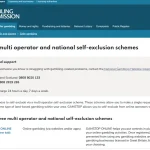
“Not on GamStop” describes a site that does not take part in the UK’s national self-exclusion scheme. It does not tell you that the site is safe, approved for British customers or a suitable place to gamble. A Malta Gaming Authority licence and GAMSTOP participation are separate things; one does not establish the other.
For operators holding a UKGC licence, participation in GamStop is compulsory. The scheme lets a person exclude themselves from all UKGC-licensed gambling sites for a chosen period: six months, one year or five years. During that time, the exclusion applies across the licensed sites covered by the scheme, rather than only to one account.
Non-UKGC licensed casinos sit outside that arrangement. That includes offshore sites that may hold a licence from another regulator, such as Malta’s. They do not participate in GamStop, so a GamStop exclusion does not block access to them. The practical point is important: “outside GamStop” is not an extra feature or a sign of greater freedom with the same safeguards. It means the scheme does not cover the site.
For operators holding a UKGC licence, participation in GamStop is compulsory, allowing a person to exclude themselves from all licensed sites for a chosen period.
What the Malta label does—and doesn’t—tell you
You may see phrases such as “MGA casinos not on GamStop” or “Malta casinos outside GamStop”. They are often used to describe sites that are not covered by the UK scheme, but the wording can blur two different questions: which regulator licensed the operator, and whether it participates in GamStop. A Malta licence alone cannot answer the second question.
Nor does a site’s willingness to register customers from Britain settle whether it is authorised to serve them. The legal requirement is tied to the market being served, not the operator’s location: offering gambling services to UK consumers without a UKGC licence is illegal for the operator. So non-participation should not be read as permission to use the site from Great Britain.
I would treat the phrase “Malta online casino not on GamStop” as a description, not a recommendation. It says something about the scheme’s reach; it says nothing reassuring about the protections available if you play there. In particular, do not assume that a non-UKGC site has the same safeguards simply because its name or licence points to a recognised regulator.
If you have registered with GamStop because you want to stop gambling, looking for sites beyond its reach defeats the purpose of the exclusion. GamStop is designed to cover UKGC-licensed operators, not every gambling website worldwide. That boundary is real, and an offshore casino can remain accessible despite your exclusion.
There is no clever workaround in that. A site being absent from GamStop is not evidence that it is an acceptable alternative for someone who has self-excluded, and it does not extend the protections of the UK scheme to that operator. Keep the distinction plain: UKGC-licensed operators must participate; non-UKGC licensed casinos do not. The label tells you where the boundary lies—not that crossing it is wise.
Anjouan Casino Licence in the UK: What It Means
Real-Money Play: Check the UK Licence Before You Deposit
Browsing a Malta casino website and staking your own money are not the same thing. You might be able to look around, read the rules or try a free-play version of a game without making a deposit. Once an operator offers real-money gambling to customers in England, Scotland or Wales, it needs a UK Gambling Commission operating licence. That requirement applies whether the company is based in Britain or elsewhere.
So, if you have found an MGA casino while looking for a Malta online casino, pause before moving from the games page to the cashier. An MGA licence is not the UK licence required to offer real-money gambling to people in Great Britain. The practical check is whether the operator holding the site has a current UKGC licence covering the service you are about to use.
I would check the operator’s name, not just the brand printed across the top of the page. A casino brand and the company running it may have different names, and a badge or a line in the footer is not enough on its own. Look up the operating company through the Gambling Commission’s public register and confirm that its licence relates to the gambling activity being offered. If you cannot match the company and the service, do not treat the site as cleared for a real-money deposit.
That point can be easy to miss when an online casino in Malta looks polished and accepts your details. A working account, a visible cashier or an available game does not establish that the operator is authorised to serve customers in Great Britain. Nor does the phrase “MGA licensed” answer the UK question. For real-money play, the UKGC licence is the dividing line.
Verify Before Depositing
- Identify the actual operating company name
- Look up the company in the Gambling Commission’s public register
- Confirm the licence covers the specific gambling activity offered
- Verify that player funds are kept separate from business money
A UKGC licence also comes with a practical safeguard around customer money. Licensed operators must keep player funds separate from money used to run the business. That separation is intended to protect balances if the casino becomes insolvent; it is not a promise that every withdrawal will be immediate or that no dispute can arise. Still, it is a meaningful distinction to check before you hand over payment details.
Free play can help you see how a game works, but it does not tell you whether the site is entitled to take real-money bets from you. Treat the two decisions separately: browsing a page is one thing; depositing and wagering is another. Before the latter, identify the operating company and verify its UKGC status. If the operator is authorised only by Malta’s regulator, that does not meet the requirement to offer real-money gambling in Great Britain.
You do not need to make the decision in a hurry. Close the cashier, check the licence, and return only if the operator’s UKGC status matches the service on offer. A familiar layout or a Malta licence may explain what the site claims to be; neither replaces that check. Keep the line clear: no verified UKGC licence, no real-money deposit.
Can a Malta-Licensed Casino Accept Players from Great Britain?
A Malta-licensed casino may let someone from Great Britain create an account or may advertise itself as open to UK customers. That tells you what the operator is willing to do, not whether it is authorised to provide gambling here. For customers in England, Scotland and Wales, an MGA licence alone is not permission to offer online gambling. An operator serving this market needs a UKGC licence, whatever country it operates from.
That distinction matters when you see claims about Malta casinos accepting UK players. A sign-up page that loads, a UK option in a country menu or a promotion aimed at British readers does not settle the regulatory question. Nor does the fact that the operator holds a licence elsewhere. Marketing and access are not the same as authorisation.
Online Slots Not on GamStop: What Players Should Know
I would treat “available to UK players” as a claim to check, not as proof that the site is suitable for you. Look for the operator’s UKGC licence details and verify them with the Gambling Commission. Do not rely only on a badge or a sentence on the casino’s own website. If there is no UKGC licence, the site is not authorised to serve customers in Great Britain, even if it accepts registrations from here.
Age and location still matter
Age checks are part of the UK system. The Gambling Commission requires operators to confirm that customers are at least 18 before they can deposit or play. If a site allows access without a meaningful check, that should not reassure you; it is a reason to pause.
No-deposit offers have a separate location condition: to claim one, you must be physically in Great Britain. Being a UK resident is not the same thing as being in Great Britain at the moment you claim it. The offer’s wording may set out other terms, but location does not turn an offshore promotion into a UKGC-authorised offer.
“Free play” can also mean different things. It may describe a non-cash game mode, or it may be used to promote a no-deposit reward. Don’t assume that the word “free” means there are no conditions, or that an offer is covered by UK rules simply because you can view it from a British address. Check what the offer actually involves and whether the operator is licensed for Great Britain.
The same caution applies to lists calling themselves the best MGA casinos for UK players. A ranking cannot make an overseas licence sufficient, and a casino’s willingness to accept British customers does not establish that it may lawfully do so. Check the licence before you treat an invitation to play as a green light.
Keep the two questions separate: can the site technically accept you, and is it authorised to offer gambling to you in Great Britain? Only the second tells you whether it belongs in the UK-regulated market. Short distinction.
Malta Casino Bonuses: Read the Wagering Terms Before You Play
A Malta casino bonus can look like extra money in your balance, but the headline amount is not the same as cash you can withdraw. The key detail is the wagering requirement: how much you must stake on qualifying games before bonus funds can convert into withdrawable cash. I always check that calculation before treating a promotion as worth anything.
Curacao Casino Licence UK: Legal Status and Risks
An affiliate casino review gives a useful worked example: a £20 bonus with a 35x wagering requirement calls for £700 in qualifying bets before the bonus converts to withdrawable cash. That is the total stake required, not a promise that you will win £700 or finish with a balance you can withdraw. The requirement measures play, not profit.
Then check which games count, and how much each bet contributes. Slots commonly contribute the full amount of a qualifying bet. Table games may contribute only 10% or 20%, while some contribute nothing. So a bet of the same value can move the wagering total by very different amounts, depending on the game. If a game contributes nothing, playing it does not help clear the requirement.
That is why two MGA casino bonuses with similar headline values can have quite different practical value. Read the promotion terms for the wagering multiple and the contribution rates, rather than assuming every game advances the balance equally. A high contribution rate does not erase the total you must wager; a low one can mean much more play is needed to reach that total.
The same check matters for a Malta casino no-deposit bonus. “No deposit” describes how the offer is presented, not whether the bonus is immediately withdrawable. Look for the wagering conditions and the games that count before you start. If the terms do not make the calculation clear, do not fill in the gaps with a guess.
I treat the bonus as a set of conditions, not a gift. Work out the required qualifying stake, then see whether the games you intend to play contribute enough for the offer to make sense to you. The smaller print is doing the real work.
What the Malta Gaming Authority Licence Covers
One practical safeguard attached to an MGA licence concerns customer money. Malta Gaming Authority licensees are required to keep player funds in segregated accounts held at an approved financial institution. In plain terms, those funds are kept apart from the operator’s ordinary business money.
Segregated Accounts
Player funds held in separate accounts at an approved financial institution, kept apart from the operator’s ordinary business money.
That separation matters, but it has a specific scope. It is a measure for holding player funds; it is not a promise that every withdrawal will be immediate, nor does the licence wording alone tell you how a particular balance would be handled in every circumstance. I would treat it as a meaningful safeguard, not a blank cheque.
When you see a site described as one of the Malta Gaming Authority casinos, look for the actual operator named in its terms and check that the licence claim relates to that business. A brand name and a regulator’s logo are not the same thing as confirming who holds the licence. It is the licensed operator’s obligations that matter.
The safeguard also should not be confused with permission to provide gambling services in Great Britain. The MGA regulates its licensees, while the UK Gambling Commission is responsible for licensing operators serving consumers in Great Britain. An MGA online casino licence does not replace the UKGC licence required for that market. These are separate questions: how a regulator requires player funds to be held, and whether an operator is authorised to serve British customers.
So, if you are reading a Malta casino list or checking a claim that a site is MGA-regulated, consider what the licence actually tells you. The segregated-account requirement is a concrete point to verify. It does not establish that every casino using Malta in its description is licensed, and it does not confer UKGC authorisation.
I find it helps to keep the terms narrow. “Player funds are held separately” is a specific safeguard. It is not the same as saying your money is guaranteed, that a dispute will be resolved in a particular way, or that a site is suitable for British play. Useful distinction.
New Malta Casino Sites: Check the Complaints Route First
A new Malta-branded casino can look polished before you know how it handles a real dispute. If a payment is delayed or a game result is challenged, the useful question is not how new the site is, but where your complaint goes and what happens if the operator does not resolve it.
For a UKGC-licensed operator, the route should be clear. The operator must work with an approved Alternative Dispute Resolution (ADR) provider. You raise the issue with the casino first, following its complaints process. If it remains unresolved, you can escalate it to that ADR provider. If the ADR stage does not settle the matter, the next step is the Gambling Commission.
Before you register with a new Malta online casino, look for its complaints policy and the name of its ADR provider. Check that the policy explains how to submit a complaint and how it can be taken further. A page that says only “contact support” leaves you without a clear picture of the formal route. Keep copies of messages and relevant account records if you do need to complain; a tidy paper trail is more useful than a long chat history you cannot find.
The Malta label, or a claim to hold an MGA licence, does not tell you what complaint process applies to a British customer. Focus on the operator’s UKGC status and the route it provides under that licence, rather than assuming a Malta regulator will handle a dispute on the same terms. New MGA casinos may have little public track record, so checking the process in advance is a sensible basic check—not proof that a dispute will go your way.
I would not treat a complaint button as the whole answer. Find out who reviews a complaint beyond the operator, and whether the site identifies an approved ADR provider. That is the practical difference between a support conversation and an independent dispute route.
If the casino’s terms do not make the route understandable, pause before playing. With a UKGC-licensed operator, you should be able to see the operator-first, ADR-next path, with the Gambling Commission as the later escalation point if the dispute remains unresolved. New site, same question: where does the complaint go?
How can you check whether an online casino is legal?
Check the operator’s identity against the UK Gambling Commission’s own licensing information and confirm that it holds a current UKGC licence. A Malta licence does not replace the licence required to offer remote gambling in Great Britain.
What tools do UK operators have to provide?
UKGC-licensed operators must offer tools including deposit and loss limits, session limits, time-outs and self-exclusion through GamStop. GamStop exclusions are available for six months, one year or five years.
Are offshore casinos legal for UK players?
An offshore operator must hold a UKGC licence to offer remote gambling to consumers in Great Britain; a foreign licence alone is not enough. The UKGC does not regulate Northern Ireland in the same way.
Casino Guides

£1 Minimum Deposit Casinos in the UK: What to Check
A low entry point is only one part of the account’s rules for play, bonuses...

£10 Minimum Deposit Casinos in the UK: What to Check
A minimum deposit is only an entry threshold; payment options, casino rules and promotion terms...

£2 Minimum Deposit Casinos in the UK: Key Checks
A £2 balance may meet a casino’s deposit minimum, but withdrawal thresholds and account conditions...

£20 minimum deposit casino UK: what it means
A £20 minimum sets the threshold for adding money, while your account balance and withdrawal...

£3 Minimum Deposit Casinos in the UK: What to Check
A low cashier minimum can still sit alongside a higher withdrawal threshold, so deposit and...

£4 Minimum Deposit Casinos in the UK: What to Check
The cashier minimum is only a starting point: payment methods, bonus terms and withdrawal conditions...

£5 Minimum Deposit Casinos in the UK: What to Check
A low cashier minimum does not guarantee qualifying bonus terms, immediate withdrawals or extended play....

Anjouan Casino Licence in the UK: What It Means
Anjouan authorisation does not replace the UK Gambling Commission permission required to serve customers in...

Casino apps in the UK: Android app or browser?
Understand when a mobile browser is enough and what an installed casino app changes, from...

Foreign Casinos for UK Players: What to Know
A guide to how non-UKGC sites operate for British customers, including licensing, player protections, payments...

UK Instant-Withdrawal Casinos: How Payouts Work
Withdrawal timing can depend on casino processing, bonus terms, verification and the payment method used....

International Casinos for UK Players: What to Check
An overview of licensing status, bonus terms, payment considerations and protections that may differ outside...

Mobile Casinos That Take Phone Credit in the UK
Phone-credit payments route a casino deposit through a mobile provider, with the cost added to...

Best Offshore Casino Sites: What UK Players Should Know
A practical guide to licensing, player protections, payments and other considerations when foreign casinos accept...

Offshore Casinos for UK Players: Rules and Risks
The guide explains how licensing, payment terms, verification and bonus conditions can affect UK players...

British Casinos Not on GamStop: UK Guide
The label signals that a casino is outside GamStop, not that it is authorised to...

Casino Not on GamStop: Instant Withdrawals Explained
Withdrawal timing depends on checks, casino processing and the payment route, so an instant request...

Casino Sites Not Registered with GamStop UK: What It Means
UKGC-licensed operators must participate in GamStop, while sites outside its jurisdiction are not required to...

No-Verification Withdrawal Casinos in the UK: What to Know
“No verification” often refers to timing, since operators may ask for identity documents before releasing...

UK Casinos With No ID Verification: What It Means
“No ID” may mean checks are delayed, not waived; casinos can use automated checks or...

Casino Without Swedish Licence: Non-UK Status Explained
Non-UK casinos may hold licences from different jurisdictions, but those labels do not offer the...

Casinos Outside GamStop: UK Licensing and Protections
GamStop exclusion applies to participating UKGC-licensed operators, while sites outside the scheme may not offer...

Curacao Casino Licence UK: Legal Status and Risks
A Curaçao licence signals a non-UK regulatory arrangement, not UKGC authorisation or a guarantee of...

Fast Withdrawal Casinos in the UK: How Payouts Work
Payout timing depends on the method used and on the difference between casino approval and...

Gibraltar Casino Licence in the UK: What It Means
A Gibraltar licence identifies the operator’s licensing jurisdiction, while UK authorisation and site terms shape...

Jackpot Mobile Casino UK: Games, Odds and Checks
Jackpot labels cover different prize structures, while mobile access, payment checks and bonus conditions shape...

Merkur Casino Online UK: Games, Demos and Checks
Learn how a casino name differs from a game label, and what to check in...

Most Trustworthy Online Casinos in the UK: Licence Checks
A licence is the starting point for assessing a casino, while the operator behind its...

No account casino UK: what the label means
Understand what the label means and how checks, bonus terms, deposits and withdrawals affect the...

No-Minimum-Deposit Casinos in the UK: Payment Rules
A low cashier minimum may not apply to every payment method, and Bitcoin claims need...

Non-Gamban Casinos in the UK and Self-Exclusion
GamStop links self-exclusion across covered online gambling operators, while other exclusion tools and routes have...

Non-GAMSTOP Curacao casino sites: what to check
A Curacao location or licence claim does not establish whether a casino participates in GAMSTOP...

Non-GamStop European Casinos: UK Rules Explained
A European base does not determine whether an operator may legally offer remote gambling to...

Non-UK Licensed Casinos: What the Licence Means
A licence identifies the regulator behind an operator, but an overseas label does not mean...

Non-UK-Registered Casinos: What UK Players Should Know
Registration, foreign gambling licences and GamStop status are separate issues, with different implications for oversight...

Non-UK-Regulated Casinos: What UK Players Should Know
A casino licensed overseas is not UK-regulated; the operator’s regulator, rather than its branding or...

Non-UKGC Licensed Casinos: Licence Checks
A practical look at regulator status, offshore licensing, player protections and what falls outside UKGC...

Online Casino No Registration UK: Free Play Explained
Browser-based demo slots can show how a game works, but free play is separate from...

Online Casino with No Sister Sites in the UK
A sister-site link can reflect common ownership or shared technology without making two casinos identical...

Online Slots Not on GamStop: What Players Should Know
GamStop applies through participating UKGC-licensed businesses, while other sites may not apply the exclusion and...

Quick Withdrawal Casinos in the UK: What to Know
Withdrawal speed depends on more than the payment method, with casino processing, verification and bonus...

Safe Online Casinos in the UK: How to Check a Licence
A practical guide to checking operator details and assessing bonuses, protections, payments and game rules...

Same-Day Payout Casinos in the UK: What to Know
Delivery times vary by payment method, and a fast label does not guarantee an immediate...

UK Online Casinos: What “Highest Paying” Means
RTP offers a long-term comparison of game returns, while withdrawal speed and individual results are...

Casinos not on GamStop in the UK: what to check
GamStop applies to UKGC-licensed online services, while checks on licensing, safeguards and terms help clarify...

Trusted UK Casinos: How to Check a Casino Licence
Understand what UK licensing confirms and which operator, payment and bonus details need separate checks....

USA Casinos for UK Players: Licensing Explained
The American label does not establish a site's licence; UKGC status, payment terms and safeguards...

VPN-Friendly Casinos in the UK: Rules and Risks
A site may allow VPN connections, but that does not make it UK-regulated or provide...