Non-GamStop European Casinos: UK Rules Explained
 Available in GB

A European base does not determine whether an operator may legally offer remote gambling to customers in Great Britain.
Table of Contents
- European Online Casinos and the UK’s GamStop Boundary
- Roulette at European Casinos: Keep the Focus on the Game
- European Casino Sites: Check the Exclusion Terms First
- No-Deposit Bonuses and Self-Exclusion: Read the Terms Before You Act
- Non-GamStop European Casinos: What the UK Exclusion Covers
- European Casinos for UK Players: Don’t Treat an Exclusion as a Workaround
- Crypto and Real-Money Searches: Pause Before You Gamble
- Casino Guides
European Online Casinos and the UK’s GamStop Boundary
“European casino” sounds like a clear category, but it tells you very little about how a site is regulated in Britain. A company may be based in Europe, serve customers in several countries or use a brand that sounds international. None of those details, by itself, establishes whether it is authorised to offer online gambling to people in Great Britain.
I’d separate two questions that are easy to muddle: where an operator is based, and which rules apply when it serves customers here. For remote gambling offered to people in Great Britain, the operator must hold the relevant licence from the UK Gambling Commission. A licence or registration connected with another European country is not a substitute for that requirement. The map is not the licence.
That distinction matters when you come across a European online casino presented as though it belongs to one uniform market. Europe is not one gambling regulator with one set of rules for every operator. A site’s location, its audience and the market it is legally serving are separate things. For a British customer, the practical question is whether the operator is authorised for this market—not whether its business has a European address.
Where GamStop fits
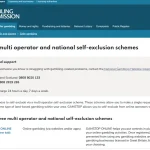
GamStop is the national online self-exclusion scheme for Great Britain. It works across multiple participating licensed gambling websites and apps, rather than applying only to one casino account. That makes it different from asking a single gambling business to exclude you from its own service: the scheme operates across its participating network.
The key word is “participating”. GamStop is not a label attached to every website that happens to be European, and it does not mean that all European operators share the same UK status. Its role is to block access across participating licensed online gambling sites and apps. You should not infer from a casino’s European branding that it is included, or excluded, from the scheme.
Non-UK Licensed Casinos: What the Licence Means
Nor should the scheme be mistaken for a general badge of quality or a statement about every part of an operator’s business. It is a self-exclusion tool with a defined role. The wider regulatory question—whether a site may legally serve customers in Great Britain—is separate. I find that distinction more useful than trying to sort sites by the country suggested in their name or marketing.
If you are comparing online casino sites with a European focus, keep those categories apart. “European” can describe a company’s base, its audience or simply the way a site presents itself. “UK-licensed” describes a regulatory status relevant to serving customers here. “Covered by GamStop” describes participation in a particular multi-operator exclusion scheme. Those phrases are not interchangeable.
A boundary, not a continent-wide rule
GamStop’s boundary is best understood through the scheme’s participating licensed operators, not through a broad idea of what counts as a European casino. A site operating in another country may be subject to that country’s arrangements; that does not make it part of GamStop. Conversely, an operator’s European base does not prevent it from holding a UK licence and participating in the scheme when it serves the British market.
This is why a list headed “best European online casinos” can obscure the point that matters most to a UK reader. A ranking may group brands by appearance or claimed location, while leaving their British regulatory position unclear. Before treating any site as suitable for you, establish what market it is authorised to serve. A continental address is not an answer.
Businesses offering gambling in Britain must provide self-exclusion by law. GamStop is one route for online self-exclusion across participating operators; it is not a claim that every website in Europe is connected to the scheme. That wording is less grand, but more accurate.
There is also a difference between a general European casino online and a site actually offering gambling to British customers. The former may be a broad description; the latter brings the UK licensing requirement into view. If an operator is not authorised for the British market, its location elsewhere in Europe does not make it a UK-regulated casino. The legal position belongs to the market being served, not to the continent on a map.
For a British customer, the critical factor is whether an operator is authorised for the UK market, regardless of whether the business has a European address.
So when you encounter claims about European online casinos, read “European” as a description that needs checking, not as proof of common rules or shared protections. GamStop has a specific place in the British picture: it is the national online self-exclusion scheme for Great Britain and blocks access across participating licensed sites and apps. The scheme’s scope and an operator’s UK authorisation are related to online gambling here, but they answer different questions. Keep them separate.
Roulette at European Casinos: Keep the Focus on the Game
When you look for roulette at a European casino, the label is only a starting point. It does not tell you whether a particular table suits you, what rules apply, or whether the casino is appropriate for a UK player. I would separate those questions rather than letting a polished name or “premium” badge answer them for you.
“European roulette” is often used as a game description, but a search for it does not identify a particular casino or establish what any table offers. Before you play, open the game information and read the rules shown there. Check the available stakes and how the game works, rather than assuming that tables with similar names are identical. If the details are unclear, do not treat the label as a substitute for them.
The same goes for claims about a “best” online roulette casino. Best for what? One person may care about clear rules; another may want a particular table format or a comfortable way to set limits. Without knowing your priorities, a ranking is just a ranking. I would not choose a casino because it appears near the top of a list or because its site calls a roulette room exclusive. A confident adjective is easy to publish. It is not evidence.
Casino Guides for UK Deposits, Licensing and Payments
Read the table details, not the sales pitch
Start with the game itself. The table’s information should let you understand the rules before you commit money. Take a moment to check the stake options and any instructions on placing or settling bets. If you cannot work out what is allowed, or what the game will do after you act, leave it alone until you can. Roulette is quick to approach and just as quick to misunderstand when you skip the instructions.
Then look at the way the game is presented. A digital table and a live presentation may feel different, but the appearance does not tell you which is preferable. Work out what you are actually selecting from the information on screen. Do not infer a particular feature from “European”, “VIP” or “premium”; those words may be used as presentation, not as a useful explanation of the rules.
I also avoid treating a high-end look as a measure of value. A VIP label does not tell you whether the table’s rules are clear or whether its stakes fit your budget. Nor does a sleek lobby make a game more suitable. The useful details are the ones that affect your decision at the table, not the ones that make the page feel exclusive.
Set a spending boundary before opening a game, and keep it separate from whatever the casino’s design encourages you to do next. If you are tempted to raise your stake after a loss or to keep playing to recover money, take that as a reason to stop. Roulette does not owe you a correction. A change of table or a more expensive room does not alter that.
Before Playing Roulette
- Open the game information and read the rules
- Check the available stakes
- Set a spending boundary
- Verify the operator’s UK licensing status
What “premium” and “VIP” can—and cannot—tell you
People looking for a premium roulette experience or a VIP table may be looking for a more private or elevated presentation. Those are preferences, not proof of better rules or a better outcome. Read the actual game description and the account terms that apply to you; do not assume that a status label means a particular benefit or level of service.
I would be especially wary of choosing a table because it seems designed for high stakes. A more imposing setting can make larger bets feel normal, even when they are not comfortable for you. Decide your limit first. If the available options do not fit it, that table is not a match, however impressive the room looks.
The word “European” can also blur two separate questions. One is what kind of roulette table is being described. The other is whether the operator is authorised to serve customers in Britain. A European-sounding name, a page aimed at UK visitors, or a familiar game title does not answer the second question. For real-money gambling offered to customers in Great Britain, operators must hold the relevant UK Gambling Commission licence. Keep that check separate from your choice of roulette.
If self-exclusion applies to you
There is one point that matters more than the table format. Self-exclusion is a request for a gambling company to stop you betting with it for an agreed period. During that period, the venues and websites you excluded yourself from should refuse you service. A roulette page being visible, or a table appearing under a European label, is not a reason to test whether the restriction will let you through.
Non-GAMSTOP Curacao casino sites: what to check
Do not open another account elsewhere to get around an exclusion. Playing at a non-GamStop casino could breach the terms of your self-exclusion, and seeking out a different roulette table does not change the commitment you made. If you have excluded yourself, the sensible response is to leave gambling alone, not to shop for a different version of the same game.
For everyone else, a considered choice still means taking the time to understand what is on screen before betting. Check the rules, check the stake options, and be honest about whether you are playing for entertainment or trying to win back money. The answer to that last question can change the whole decision.
There is no need to turn a roulette search into a hunt for a “best” or “VIP” label. Find out what the table actually offers, make sure the operator is appropriate for a UK customer, and stop if the game no longer feels manageable. The label is the easy part. The decision is yours.
European Casino Sites: Check the Exclusion Terms First
A European address or theme tells you little about how a casino will handle a request to stop gambling. If you are considering a particular site, look for its Responsible Gambling or Safer Gambling page and read the self-exclusion instructions there. Gambling businesses must offer self-exclusion, and you can ask a single business to exclude you.
The practical route is straightforward: follow the site’s instructions. If you cannot find them, contact customer services and ask how to make a self-exclusion request. Keep the conversation focused: tell them you want to self-exclude, and follow the steps they give you. Self-exclusion is a formal request, not just a note in your account settings.
How to Self-Exclude
Find the instructions
Look for the Responsible Gambling or Safer Gambling page on the site.
Submit the request
Follow the site’s specific instructions or contact customer services to formally request self-exclusion.
Confirm the action
Ensure the site confirms the exclusion has been applied and keep this confirmation for your records.
I would check that the page explains how to submit the request and how the site confirms it has been applied. Do not assume that closing an account, deleting an app or unsubscribing from emails is the same thing. Those actions may change how you use the service, but the route for self-exclusion is the one set out by the casino or its support team. Get confirmation and keep it somewhere you can find later.
There is no useful shortcut in a list labelled “best” or “top” European casino sites. A ranking cannot tell you whether a particular operator will handle your exclusion request clearly, and a new site is not automatically a better choice. Nor does the phrase “European slots” tell you anything about the exclusion process: that is tied to the gambling business and its own procedures, not to the games on its lobby.
For anyone in Great Britain, the legal point matters too. A remote operator selling gambling to British customers must hold a UK Gambling Commission licence, wherever the business is based. So a site’s European location does not, by itself, make it a legal option for UK customers. Check the operator’s status before depositing, rather than treating its address or branding as proof.
The same care applies when you see claims about European casino bonuses or a site being outside GamStop. A promotion does not answer the more important question of whether you can put a clear exclusion in place with that individual business. If you are already trying to stop gambling, do not let a bonus or a polished sign-up page rush you past the safer-gambling information.
Non-Gamban Casinos in the UK and Self-Exclusion
Read the instructions before opening an account. Look for the site’s named self-exclusion route, use it rather than relying on a general account closure, and contact customer services if the instructions are missing or unclear. A clear process is the minimum to look for. A glossy lobby is not the point.
No-Deposit Bonuses and Self-Exclusion: Read the Terms Before You Act
A no-deposit offer can sound like a way to try a casino without putting money in first. But if you have made a self-exclusion agreement with that gambling business, the offer is beside the point: the agreement is not a bonus condition you can set aside when something attractive appears.
Self-exclusion is a formal commitment not to gamble with the business you excluded yourself from. You are responsible for keeping to it. That includes resisting the urge to reopen the relationship through a promotion, even if the message looks like a harmless invitation to claim a free bonus.
There is a practical consequence for your account, too. Once the agreement is in place, the gambling business must close your account, return any funds held in it and remove your details from its marketing databases. A no-deposit bonus should not be treated as a reason to expect continued access to that account or its promotions. The terms of an offer do not cancel the exclusion.
Critical Warning
Do not try to use a no-deposit bonus to reopen a relationship with a business you have excluded yourself from; the agreement is not a bonus condition.
If you are considering a European casino no-deposit bonus, read the offer only in the context of your own position. The wording may draw attention to a reward, but the key issue is whether you have excluded yourself from that business. If you have, do not try to claim the offer or create another account to get around the agreement. That would run against the commitment you made.
Marketing can also complicate matters. After self-exclusion, your details should be removed from the business’s marketing databases. If you receive a promotional message after agreeing to exclude yourself, do not treat it as permission to gamble. Keep the message and contact the business through its customer service channel to raise the issue; do not follow its promotional link.
When you are comparing no-deposit offers, pause before entering personal details or registering. A bonus may be described as free, but the decision to act can still bring you back into a gambling environment you agreed to avoid. The safest reading of the agreement is the plain one: you asked the business to stop your gambling there, and you need to stick to that request.
That is the part worth taking seriously. A promotion does not rewrite the agreement.
Non-GamStop European Casinos: What the UK Exclusion Covers
If you’re considering non-GamStop European casinos in 2026, stated payout speed is one practical detail to check. Use this list as a quick reference when reviewing your options.
1. NightWin
Payout speed: 1-3 business days NightWin lists a payout speed of 1–3 business days, giving you a stated timeframe to consider.
2. SlotoSport
Payout speed: 1-3 business days SlotoSport lists payouts at 1–3 business days. You can use that stated speed as one point in your review.
3. Revery Play
Payout speed: 1-3 business days Revery Play’s stated payout speed is 1–3 business days, a useful detail for you to note.
4. Zombillion
Payout speed: 1-3 business days Zombillion lists a payout speed of 1–3 business days. That is the available timing detail for you to consider.
5. Amunbet
Payout speed: 1-3 business days Amunbet states a payout speed of 1–3 business days, which gives you a timeframe to factor into your choice.
6. Dieselwin
Payout speed: 1-3 business days Dieselwin lists payouts at 1–3 business days. You can take this stated speed into account when reviewing the operator.
7. Britsino
Payout speed: 1-3 business days Britsino’s listed payout speed is 1–3 business days, providing you with a clear timing detail.
8. BeOnBet
Payout speed: 1-3 business days BeOnBet states a payout speed of 1–3 business days. This is the available point of note for you.
9. Chanze
Payout speed: 1-3 business days Chanze lists a payout speed of 1–3 business days, a stated timeframe for you to consider.
10. EvoSpin
Payout speed: 1-3 business days EvoSpin lists payouts at 1–3 business days. You can use this stated timing as part of your review.
The phrase “European casino not on GamStop” can make the scheme sound like a directory of casinos by country. It is not. GamStop is a multi-operator self-exclusion scheme for online gambling in Great Britain. It blocks access across participating licensed gambling websites and apps; it does not classify casinos according to whether they are based in Europe.
That distinction matters if you are trying to understand what your exclusion covers. When you register with GamStop, UKGC-licensed gambling platforms must block you for the period you selected. The scheme is free, and the exclusion is intended to prevent access to current gambling accounts as well as the creation of new ones with covered operators. Since participation became compulsory for UK-licensed online operators in 2020, regulated casinos in the UK have been required to block self-excluded customers.
The key boundary is the licence, not the operator’s address. A company may be based elsewhere in Europe, but if it offers remote gambling to customers in Great Britain, it must hold the relevant UK Gambling Commission licence. A European location does not, by itself, put a casino outside UK rules or outside GamStop’s reach. Conversely, a site that is not part of the UK-licensed system may not be covered by the scheme. “European” and “not on GamStop” are not reliable shorthand for a particular legal status.
Non-UK-Registered Casinos: What UK Players Should Know
What the exclusion applies to
GamStop is designed to work across licensed online gambling operators, rather than only at the one company where you first registered. Once your exclusion is active, UKGC-licensed gambling platforms are required to prevent you from using their services. That includes the covered online casino accounts and apps, not just a particular game or payment method.
The selected exclusion is for a fixed period. The available periods described for registration include six months, one year or five years. While it is in force, the point is that you cannot access the covered gambling platforms or open another account with them. It is not simply a note on one casino account that you can set aside when you feel like playing elsewhere.
There is a difference between the legal coverage and what a label on a website suggests. A casino calling itself “non-GamStop” does not establish where it is licensed, whether it is legally permitted to serve British customers, or how it handles a self-exclusion request. Those are separate questions. For Great Britain, a remote operator selling gambling to local customers must hold a UKGC licence. Online gambling is legal here only through sites licensed and regulated in the UK.
Do
- Respect GamStop as a boundary
- Check for a UKGC licence
- Use official self-exclusion routes
Don’t
- Seek “non-GamStop” workarounds
- Trust a European address as a licence
- Try to recover losses by gambling more
This is why a list of “European casinos not on GamStop” can mislead. It groups sites by a phrase that says little about their legal relationship with the UK market. A casino’s European headquarters does not exempt it from the UK licensing requirement if it serves customers in Great Britain. Nor does the absence of a GamStop connection turn an unlicensed site into a UK-regulated one. The label is not a licence. Not even close.
Gambling businesses must provide self-exclusion as a legal consumer-protection measure. For UK-licensed operators, GamStop provides a way to apply that exclusion across participating online platforms, rather than relying on one casino to act alone. The requirement for operators to block excluded players has applied since GamStop participation became mandatory for UK-licensed online operators in 2020.
If you are already excluded, treat the scheme’s coverage as a boundary to respect, not a puzzle to solve by looking for a site that uses different wording. Gambling at a non-GamStop casino could breach the terms of your self-exclusion. The fact that a site is outside the scheme does not cancel your agreement or make the risk disappear. I would not read “not registered with GamStop” as reassurance; it tells you only that the scheme may not cover that site.
If money has already been spent gambling, the Gambling Commission cannot provide a refund for it. That is separate from the question of which accounts GamStop blocks, but it is worth keeping clear: self-exclusion is a prevention tool, not a way to recover gambling losses.
Casino Not on GamStop: Instant Withdrawals Explained
So, when you see references to non-GamStop European casinos, focus on the UK boundary. GamStop covers participating licensed online gambling sites and apps, and UK-licensed operators must block registered customers during their chosen exclusion. A casino’s location elsewhere in Europe does not alter that rule when it serves the British market. A site outside the scheme is not automatically a lawful or suitable option for a UK player.
European Casinos for UK Players: Don’t Treat an Exclusion as a Workaround
If you have chosen self-exclusion, looking for a European casino for UK players is not a safe way to get around it. The important point is not where a website is based or how it describes itself: playing elsewhere while excluded could breach the terms you agreed to. Don’t open another account to keep gambling.
In Great Britain, you can use GAMSTOP to exclude yourself from UK-licensed online casinos. Gambling businesses are required by law to offer self-exclusion, and they must take reasonable steps to stop customers who have excluded themselves from gambling with them. That protection is not a reason to test whether a different account, device or site will get through. It is a reason to stop and respect the agreement you made.
If you feel tempted to gamble, exclude yourself in every place where you might do so, not just the account you use most. That may mean considering online gambling as well as venues you visit in person. A gap between exclusions can make it easier to act on an urge before you have put the same barrier in place elsewhere.
Attention Opening another account at a European casino to bypass a self-exclusion could breach the terms of your agreement.
Self-exclusion is a commitment, not a payment remedy. The Gambling Commission cannot refund money you have spent gambling. If you have already excluded yourself and are struggling to stick to it, don’t try to solve that by finding a casino that accepts UK players. Contact a support service such as GamCare instead, and ask someone you trust to help you avoid gambling while you get support.
The appeal of searching for European online casinos can be strongest when a UK account is no longer available. But a different country label does not change the practical risk: gambling during an exclusion can undermine the boundary you put in place. Keep the exclusion active, and do not create another account to work around it.
Crypto and Real-Money Searches: Pause Before You Gamble
Crypto can make a casino search feel like a payment-method question. Real-money play, free spins and roulette can make it feel like a choice between products. But if you have self-excluded, the important question comes first: would gambling at this site go against the agreement you made?
Using cryptocurrency does not make that question disappear. A European casino accepting a particular coin, or offering a particular game or promotion, cannot be assumed from its location or its advertising. More importantly, changing the payment method does not change the terms of your self-exclusion. Playing at a non GamStop casino could breach those terms, so do not treat a different-looking site as a safe loophole.
I would pause before entering payment details, creating an account or claiming an offer. UK-facing real-money gambling is legal only through operators with the relevant UK Gambling Commission licence. A site being based in Europe, using crypto or describing itself as an online casino does not, by itself, show that it is licensed to serve customers in Great Britain.
If you are already excluded
Do not open another account elsewhere to get around an exclusion. Instead, use the self-exclusion routes available to you: you can register with GAMSTOP ONLINE to exclude yourself from online gambling operators through one request, or contact an individual online casino to ask for self-exclusion there. Gambling businesses must provide self-exclusion, and they must take reasonable steps to stop excluded customers from gambling with them.
Non-UK-Regulated Casinos: What UK Players Should Know
Think beyond the site you have just been considering. Exclude yourself from every place where you may be tempted to gamble, including individual online accounts and venues you might visit in person. Self-exclusion is a formal agreement, not a payment setting or a prompt you can safely ignore. Once it is in place, the business must close your account, return any funds held in it and remove your details from its marketing databases.
That is a firm boundary. Keep it that way.
Crypto and real-money promotions can pull attention towards the next deposit or bonus. They do not change the practical advice: do not gamble while excluded. A free-spins offer, if one is advertised, is not a reason to test whether an exclusion applies. Nor should you assume that a casino’s location or payment options tell you how it handles self-excluded customers.
Keep the decision separate from the payment method
If you are not self-excluded and are considering real-money gambling, check the operator’s UK status before depositing. UK-licensed casinos must provide responsible-gambling tools, including self-exclusion. Operators must also verify a customer’s age before allowing them to deposit into a gambling account. These safeguards matter more than whether the cashier displays a coin or a card.
If you have already gambled and regret spending money, self-exclusion is a way to stop access going forward; it is not a way to recover losses. The Gambling Commission cannot refund money spent gambling. Do not make another deposit in the hope of winning back what has gone.
For me, the sensible point to stop is before account creation, not after money has moved. If the urge to gamble is strong, use self-exclusion with the online operators where you may be tempted, and consider excluding yourself from other venues too. A different currency does not make a difficult decision easier.
How does self-exclusion work?
You contact a gambling business or register with a multi-operator scheme, provide details to confirm your identity and choose an exclusion period. The businesses covered by the exclusion must refuse your gambling, and an individual business must close your account, return your balance and remove you from its marketing lists.
How do I return from self-exclusion?
You must contact GamStop directly to request removal. A 24-hour cooling-off period applies, during which you can cancel the request; after removal is processed, operators may take a further 24 to 48 hours to update your status.
How does GamStop benefit me?
GamStop lets you block yourself, free of charge, from accessing existing accounts or opening new ones with participating UK online gambling operators. It provides one exclusion across those operators rather than requiring separate requests to each site.
How long does it take for GamStop to become active after sign-up?
The 24-hour cooling-off period starts once your identity has been verified, and your exclusion remains active during that period.
How does a non-GamStop casino handle self-exclusion?
You can request exclusion directly from an individual gambling business, usually through its Responsible Gambling or Safer Gambling page or by contacting customer services. A gambling business must close your account, return your funds and remove your details from its marketing lists.
What self-exclusion options are available at non-GamStop casinos?
You can ask an individual casino to exclude you from its service. GamStop offers a separate multi-operator option for participating licensed online sites and apps.
Casino Guides

£1 Minimum Deposit Casinos in the UK: What to Check
A low entry point is only one part of the account’s rules for play, bonuses...
£10 Minimum Deposit Casinos in the UK: What to Check
A minimum deposit is only an entry threshold; payment options, casino rules and promotion terms...

£2 Minimum Deposit Casinos in the UK: Key Checks
A £2 balance may meet a casino’s deposit minimum, but withdrawal thresholds and account conditions...

£20 minimum deposit casino UK: what it means
A £20 minimum sets the threshold for adding money, while your account balance and withdrawal...

£3 Minimum Deposit Casinos in the UK: What to Check
A low cashier minimum can still sit alongside a higher withdrawal threshold, so deposit and...

£4 Minimum Deposit Casinos in the UK: What to Check
The cashier minimum is only a starting point: payment methods, bonus terms and withdrawal conditions...

£5 Minimum Deposit Casinos in the UK: What to Check
A low cashier minimum does not guarantee qualifying bonus terms, immediate withdrawals or extended play....

Anjouan Casino Licence in the UK: What It Means
Anjouan authorisation does not replace the UK Gambling Commission permission required to serve customers in...

Casino apps in the UK: Android app or browser?
Understand when a mobile browser is enough and what an installed casino app changes, from...

Foreign Casinos for UK Players: What to Know
A guide to how non-UKGC sites operate for British customers, including licensing, player protections, payments...

UK Instant-Withdrawal Casinos: How Payouts Work
Withdrawal timing can depend on casino processing, bonus terms, verification and the payment method used....

International Casinos for UK Players: What to Check
An overview of licensing status, bonus terms, payment considerations and protections that may differ outside...
Mobile Casinos That Take Phone Credit in the UK
Phone-credit payments route a casino deposit through a mobile provider, with the cost added to...

Best Offshore Casino Sites: What UK Players Should Know
A practical guide to licensing, player protections, payments and other considerations when foreign casinos accept...

Offshore Casinos for UK Players: Rules and Risks
The guide explains how licensing, payment terms, verification and bonus conditions can affect UK players...

British Casinos Not on GamStop: UK Guide
The label signals that a casino is outside GamStop, not that it is authorised to...

Casino Not on GamStop: Instant Withdrawals Explained
Withdrawal timing depends on checks, casino processing and the payment route, so an instant request...

Casino Sites Not Registered with GamStop UK: What It Means
UKGC-licensed operators must participate in GamStop, while sites outside its jurisdiction are not required to...

No-Verification Withdrawal Casinos in the UK: What to Know
“No verification” often refers to timing, since operators may ask for identity documents before releasing...

UK Casinos With No ID Verification: What It Means
“No ID” may mean checks are delayed, not waived; casinos can use automated checks or...

Casino Without Swedish Licence: Non-UK Status Explained
Non-UK casinos may hold licences from different jurisdictions, but those labels do not offer the...

Casinos Outside GamStop: UK Licensing and Protections
GamStop exclusion applies to participating UKGC-licensed operators, while sites outside the scheme may not offer...

Curacao Casino Licence UK: Legal Status and Risks
A Curaçao licence signals a non-UK regulatory arrangement, not UKGC authorisation or a guarantee of...

Fast Withdrawal Casinos in the UK: How Payouts Work
Payout timing depends on the method used and on the difference between casino approval and...

Gibraltar Casino Licence in the UK: What It Means
A Gibraltar licence identifies the operator’s licensing jurisdiction, while UK authorisation and site terms shape...

Jackpot Mobile Casino UK: Games, Odds and Checks
Jackpot labels cover different prize structures, while mobile access, payment checks and bonus conditions shape...

Merkur Casino Online UK: Games, Demos and Checks
Learn how a casino name differs from a game label, and what to check in...

Most Trustworthy Online Casinos in the UK: Licence Checks
A licence is the starting point for assessing a casino, while the operator behind its...

No account casino UK: what the label means
Understand what the label means and how checks, bonus terms, deposits and withdrawals affect the...

No-Minimum-Deposit Casinos in the UK: Payment Rules
A low cashier minimum may not apply to every payment method, and Bitcoin claims need...

Non-Gamban Casinos in the UK and Self-Exclusion
GamStop links self-exclusion across covered online gambling operators, while other exclusion tools and routes have...

Non-GAMSTOP Curacao casino sites: what to check
A Curacao location or licence claim does not establish whether a casino participates in GAMSTOP...

Non-UK Licensed Casinos: What the Licence Means
A licence identifies the regulator behind an operator, but an overseas label does not mean...

Non-UK-Registered Casinos: What UK Players Should Know
Registration, foreign gambling licences and GamStop status are separate issues, with different implications for oversight...

Non-UK-Regulated Casinos: What UK Players Should Know
A casino licensed overseas is not UK-regulated; the operator’s regulator, rather than its branding or...

Non-UKGC Licensed Casinos: Licence Checks
A practical look at regulator status, offshore licensing, player protections and what falls outside UKGC...

Online casinos with an MGA licence in the UK
An MGA licence identifies Malta’s regulator, but does not establish that a casino is authorised...

Online Casino No Registration UK: Free Play Explained
Browser-based demo slots can show how a game works, but free play is separate from...

Online Casino with No Sister Sites in the UK
A sister-site link can reflect common ownership or shared technology without making two casinos identical...

Online Slots Not on GamStop: What Players Should Know
GamStop applies through participating UKGC-licensed businesses, while other sites may not apply the exclusion and...

Quick Withdrawal Casinos in the UK: What to Know
Withdrawal speed depends on more than the payment method, with casino processing, verification and bonus...

Safe Online Casinos in the UK: How to Check a Licence
A practical guide to checking operator details and assessing bonuses, protections, payments and game rules...

Same-Day Payout Casinos in the UK: What to Know
Delivery times vary by payment method, and a fast label does not guarantee an immediate...

UK Online Casinos: What “Highest Paying” Means
RTP offers a long-term comparison of game returns, while withdrawal speed and individual results are...

Casinos not on GamStop in the UK: what to check
GamStop applies to UKGC-licensed online services, while checks on licensing, safeguards and terms help clarify...

Trusted UK Casinos: How to Check a Casino Licence
Understand what UK licensing confirms and which operator, payment and bonus details need separate checks....

USA Casinos for UK Players: Licensing Explained
The American label does not establish a site's licence; UKGC status, payment terms and safeguards...

VPN-Friendly Casinos in the UK: Rules and Risks
A site may allow VPN connections, but that does not make it UK-regulated or provide...