VegasHero Registration and KYC: Account Setup, Verification and Support
 Available in GB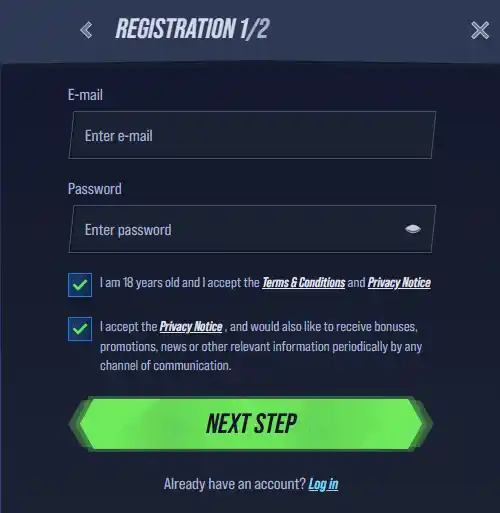
VegasHero UK Guide
Independent casino review and regulatory context
Account guide – checked 11 September 2026
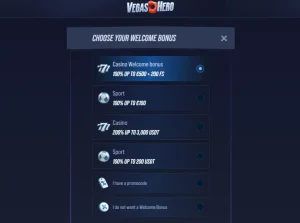
VegasHero’s current registration entry point starts with a welcome-offer choice and includes an option to continue without a welcome bonus; existing users are directed to Log in. The current terms require a personal account and true, complete registration information, and VegasHero can request identity, address and payment-method evidence as part of KYC. Verification is usually described as completing within 10 days after a request has been answered in full, with extra time possible in more complex cases. UK Gambling Commission identity rules are useful British market context, but they apply to UKGC remote licensees and must not be presented as proof that VegasHero follows UKGC requirements.
The current public sign-up page begins with a welcome-offer selection step.
The terms require a personal account and true, complete registration information.
Identity, address and payment-ownership evidence are among the stated examples.
UKGC identity rules are market context, not a VegasHero account feature.
Table of Contents
- How the current VegasHero registration entry point works
- Registration and KYC are different stages
- What the stated verification timing means
- UKGC identity rules are a benchmark, not a VegasHero compliance claim
- Support is part of the account journey
- A practical pre-withdrawal verification checklist
- Registration choices that are easy to overlook
- Why completing account details early can simplify a later cashout
- Current sources for registration and KYC
- What UK players should know before opening a VegasHero account
- Is VegasHero Licensed in the UK? UKGC Check, Regulation and Trust Signals
How the current VegasHero registration entry point works
The public registration page currently opens with a choice of welcome-offer routes and a separate option to proceed without a welcome bonus. It also gives existing account holders a Log in route. That makes the first visible step partly promotional, but choosing an offer is not the same thing as completing account verification.
VegasHero’s current terms say the full site requires a personal account and that registration information must be true and complete. The public static registration page does not expose every later field in a way that is reliable enough to reproduce here, so this guide does not invent a fixed form sequence. The live page should be treated as the source for the exact fields presented to a new account at the time of sign-up.
If you are still deciding whether to open an account, start with the VegasHero review. It separates site features from the more important question of regulatory position for UK readers.
Registration and KYC are different stages
Account creation establishes the user profile. KYC is the separate process used to verify identity and other information when the operator requests it. VegasHero’s terms allow checks around identity, age, residence and source or ownership of funds, and they can be performed before or after deposits and around withdrawals.
The document examples in the current terms include identity evidence, proof of residence and evidence showing ownership or transaction history for the payment method. These are examples of information that may be requested. They should not be turned into a universal checklist saying every user must upload the same files in the same order.
This distinction becomes especially important at cashout. The withdrawal verification explains the operator’s three-business-day financial-review wording and why a KYC request can create a separate review stage.
What the stated verification timing means
VegasHero’s terms currently say verification is usually completed within 10 days after the verification request has been answered in full. They also say additional time or checks can be required depending on the circumstances and complexity of the case.
The phrase “answered in full” is important. A partially supplied request, an unreadable document or information that does not resolve what the operator asked for does not provide the same starting point as a complete response. The sensible account-management approach is to respond to the actual request, keep the information consistent with the account and avoid submitting unrelated documents in the hope that more files will automatically make the process faster.
UKGC identity rules are a benchmark, not a VegasHero compliance claim
For UKGC remote licensees, the Great Britain framework is stricter about when core identity and age checks happen. The Commission’s current licence condition says remote licensees must establish identity before a customer is permitted to gamble and that the minimum information includes name, address and date of birth. Its remote social-responsibility rules also require applicable licensees to verify age before a customer can deposit, access free-to-play gambling games or gamble.
Those requirements describe what a UKGC licensee must do. They do not prove that VegasHero is UKGC-licensed, and they should not be used to label the VegasHero sign-up journey “UKGC compliant”. Local regulatory status should be assessed independently in the licence check.
The practical comparison is still useful: a UK reader accustomed to locally licensed sites may expect age and core identity checks before gambling. VegasHero’s own terms instead need to be read on their own wording, with KYC handled as the operator describes it rather than assumed from the UKGC framework.
Support is part of the account journey
VegasHero provides an English-language site and current official support material shows 24/7 live chat. The official support email is [email protected]. Those channels matter most when the issue is specific to an account: a rejected document, a changed personal detail, an access problem or a question about what a verification request actually requires.
Use support to clarify the operator’s request rather than to substitute for it. If the account asks for a particular type of proof, keep the chat or email response that explains what will satisfy the request. For funding questions, the payments separates verified cashier categories from UK-specific methods that still need a live check.
If the problem is interface access rather than account data, the mobile access covers the browser-based mobile experience separately so that registration and KYC do not get mixed with device usability.
A practical pre-withdrawal verification checklist
Keep account details consistent
Use accurate personal information and update the operator if a material account detail changes instead of allowing old and new information to conflict.
Prepare evidence only when it is relevant
Identity, residence and payment-ownership evidence are stated examples, but the actual request should determine what you submit.
Resolve KYC before relying on a payout clock
A withdrawal review and an identity check are separate processes. Completing verification earlier reduces uncertainty about which stage is holding the request.
Know which protections are local
UKGC identity rules and GAMSTOP belong to the Great Britain licensed framework. Do not assume those protections attach to an operator without verifying its local status.
Registration choices that are easy to overlook
The first visible registration choice can create two distractions. One is treating the bonus selector as if it were the whole sign-up process. The other is choosing an offer before checking whether its terms fit how you intend to deposit and play. The registration page itself includes a no-welcome-bonus route, so taking a promotion is not the only visible entry path.
For UK readers, it is also worth separating account acceptance from regulatory authorization. A working registration page, English support or successful login tells you that the service is operational for an account journey; none of those signals establishes a UKGC licence. That is why this guide keeps the account mechanics here and sends legal and player-protection questions to the dedicated trust pages.
Why completing account details early can simplify a later cashout
Registration creates the account, while KYC can be requested later under the operator’s terms. That distinction matters before the first withdrawal: accurate personal details and a clear response to any identity, residence or payment-ownership request reduce the chance that an avoidable mismatch becomes part of the cashout process. The operator’s stated verification timing should still be read as a review window, not a promise that every account follows the same path. If support is needed, the verified live-chat and email channels belong to the account journey rather than changing the separate regulatory question.
Current sources for registration and KYC
Brand-specific account and verification details were rechecked against current official VegasHero pages. UKGC material is included only to explain the identity-verification framework that applies to its remote licensees.
- VegasHero official registration page
- VegasHero General Terms and Conditions
- VegasHero official Help Centre
- UK Gambling Commission customer identity verification condition
- UK Gambling Commission remote age-verification code
What UK players should know before opening a VegasHero account
Use the live registration page for the current fields and offer choices, and treat account creation, KYC and regulatory status as three separate questions. VegasHero requires a personal account with accurate registration information, can request identity, residence and payment-ownership evidence, and currently describes verification as usually completing within 10 days after a request is answered in full. UKGC age and identity rules remain useful context for what locally licensed remote operators must do, but they are not evidence that VegasHero is UKGC-authorized. Before depositing, check the account journey you are actually being shown, the payment route you expect to use and the separate UK regulatory position.
Keep account details accurate and current.